Print subscription includes a free wall-size coloured map.Special offer: Subscribe Now (Print) and Get Free Wall Size Coloured Map!Subscribe Now
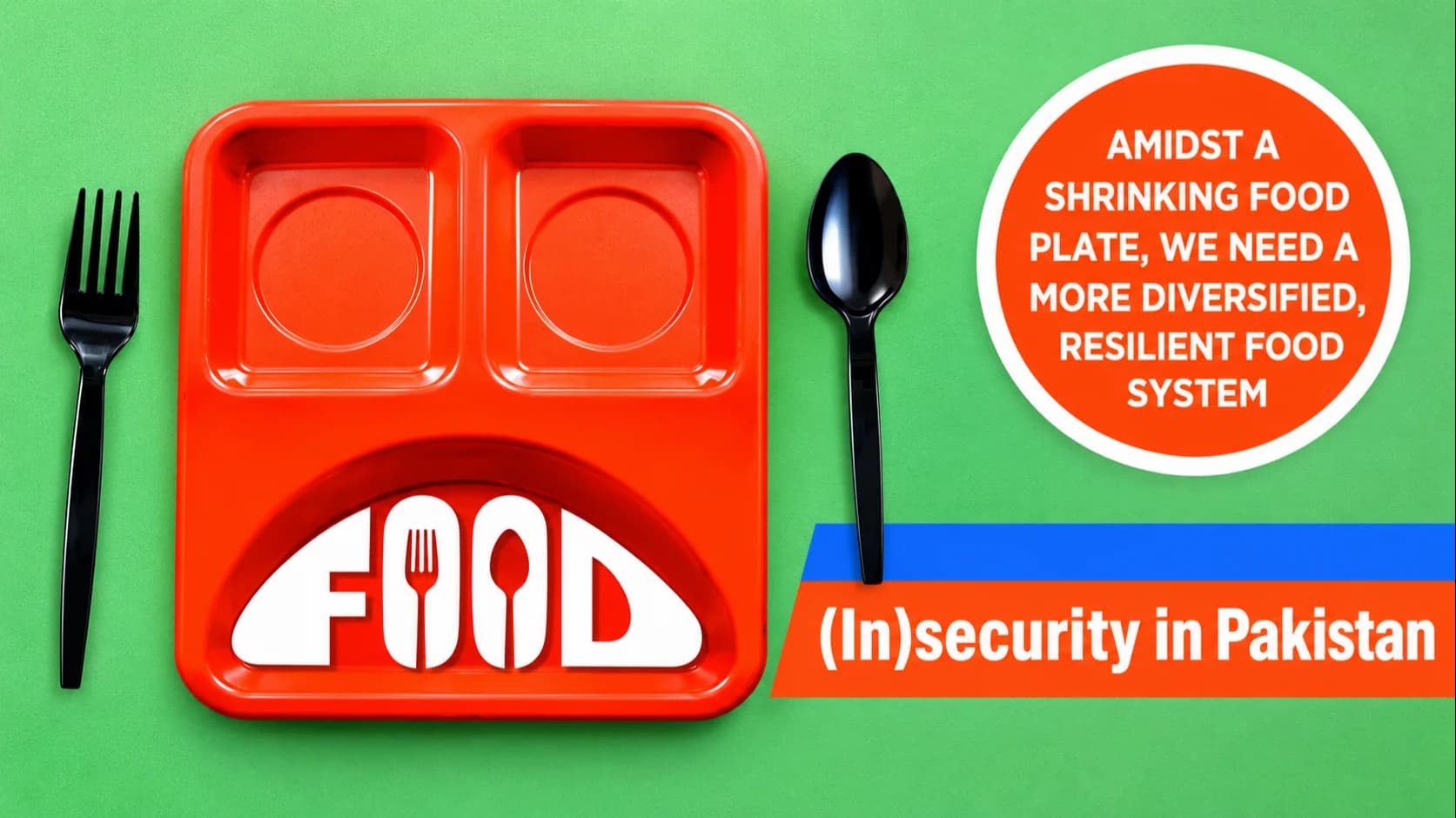
Summary. Amidst a shrinking food plate, we need a more diversified, resilient food system
Over the past few decades, the concept of security has undergone significant evolution. Once defined in narrow military terms, involving protection of sovereignty, territorial integrity and defence against external military aggression, it now also includes safeguarding a state from non-military threats like economic instability, environmental degradation, ethnic conflicts and terrorism. The meteoric rise of China and a growing global emphasis on economic competition added further impetus, leading to the emergence of an individual-centric concept of national security. Achieving comprehensive national security has now become a stated goal of every state, involving policy and administrative measures to ensure environmental security, health security, political security, homeland security and, obviously, food security. Food security is now considered a vital prerequisite to provide human security, economic security and health security. Despite the obvious and low-hanging dividends of this vital pillar of security, the state of food security in Pakistan has become dire, necessitating remedial measures on a war footing to remove the hanging swords of low labour productivity, loss of labour and enhanced burden of healthcare.
Before we move ahead to discuss food security in Pakistan, it would be pertinent here to define the concept of food security and its dimensions for a comprehensive understanding of the topic at hand.
In simple terms, food security is the availability of food and the access to it by people. It means that people have enough food to eat all year round and that the food is safe and nutritious.
Based on the 1996 World Food Summit, food security is “when all people, at all times, have physical and economic access to sufficient, safe and nutritious food that meets their dietary needs and food preferences for a healthy and active life.”
This widely accepted definition points to the following dimensions of food security:
1. Availability: Physical availability of food deals with the supply side, involving food production, stock levels and net trade.
2. Access: Economic and physical access involves the entitlement of individuals to adequate resources for a nutritious diet. Access to food deals with policy measures related to income, expenditure, market and prices.
3. Utilization: It refers to the utilization of food through adequate diet, clean water, sanitation and health care to reach a state of nutritional well-being where all physiological needs are met. This brings out the importance of non-food inputs in food security.
4. Stability: It refers to proactive and remedial measures so that sudden shocks, such as climate change-induced extreme weather events or cyclic events like seasonal floods or drought, would not lead to a situation where individuals cannot access sufficient, safe and nutritious food.
Unfortunately, Pakistan lags behind even lower-middle-income countries when it comes to meeting all four dimensions of food security. Over the past few years, particularly after 2018, food security has been consistently worsening, driven largely by political instability, economic uncertainties, weak management of resources, poor price control mechanisms and declining crop yields. Reports by international organization bear testimony to this:
a. As per the 2025 Global Hunger Index, Pakistan ranks 106th out of 123 countries. As per the Index:
· 16.5% of the country's population is undernourished,
· 33.6% of children under 5 are stunted,
· 10% of children under 5 are wasted and
· 5.8% of children die before their fifth birthday.
Worryingly, this report shows that although Pakistan made significant improvements on all these indicators during 2006-2016, all these indicators suffered from serious regression during the 2016-2026 period.
b. Similarly, the FAO (Food and Agriculture Organization of the United Nations) has also reported the same downward trend, noting that:
· During the 2014-2019 period, 26 million to 32 million Pakistani people were moderately or severely food insecure.
· This proportion doubled in 2018-2020, reaching 56 million people who could not access food.
· Worse still, FAO's data for 2022-24 show that an estimated 104 million individuals in Pakistan are unable to have access to safe, sufficient and nutritious food.
In addition to food insecurity, nutrition insecurity is also becoming an alarming issue.
· The FAO's 3-year average for 2022-24 reveals that 16.5% of the total population, or 40 million people, in Pakistan, are undernourished.
It is, therefore, not wrong to conclude that food insecurity is not a short-term and temporary crisis; it has become a long-term threat to Pakistan's economic and human security.
One of the most obvious reasons for rising food insecurity in Pakistan is poverty which adversely impacts all dimensions of food security. The World Bank has estimated that 25.3% of the country's population is living below the poverty line. Needless to say, poverty leads to reduced buying capacity which means that people cannot afford even the requisite quantity of food, let alone nutritious and wholesome food required for comprehensive food and nutrition security. The World Bank notes that the consequent reduced capacity to handle economic shocks and bear food-related expenditure of rural communities has resulted in “considerably higher incidents of malnutrition, including wasting and stunting among poorer quintiles of expenditure distribution”. The situation is more or less similar in urban areas as well, where urban communities are spending more than half of their income on buying food essentials, making it very hard to spare surplus income for nutrient-rich food to meet their dietary needs.
Over the years, climate change has become another key driver of rising food insecurity in Pakistan. Extreme weather phenomena, particularly floods, have pushed millions of people into an unending cycle of hunger and malnutrition. For instance, the 2022 flood was an unprecedented climate catastrophe, destroying 9.4 million acres of cropland and killing 1.2 million heads of livestock. Similarly, the 2025 flood has also proved quite devastating.
Details of the losses shared with the IMF show that the agriculture sector sustained Rs439 billion in losses, roughly 60% of the total. Almost all these were crop-related. As a result, agriculture growth is now projected at 3%, compared to the 4.5% target. Growth in the crops sub-sector is expected to fall below 1%, against the target of 5.4%. Crops on 3.3 million acres and 22,841 livestock were affected. Roughly one-third of the cotton crop was destroyed, with output now projected at 7.2 million bales, a reduction of up to 3.4 million bales, as per preliminary estimates.
Authorities estimated that 12.6% of the rice crop was damaged, with expected production at 8.9 million tons, representing a loss of 600,000 to 1.2 million tons. Sugarcane production has been revised to 79 million tons, reflecting losses between 1.3 million and 3.3 million tons, or 4% of budget estimates. Maize production is projected to decline by 13%, with output capped at 9.2 million tons.
Moreover, climate change is also making Pakistan's food systems vulnerable owing to the disturbance in precipitation patterns, rising temperatures, worsening heatwaves and loss of productivity of certain staple crops. It should be noted that Pakistan has a dryland ecosystem and dryland flora and fauna have very low adaptive capacity. Consequently, all major crops in Pakistan, including rice, vegetables, spices, wheat and other cereal crops, are experiencing stagnation or a steady decline in yield which is insufficient to feed the rising number of mouths. The case of wheat, which is responsible for 72% of Pakistan's daily caloric intake, is worth attention.
The Green Revolution, which ensured massive enhancement in the yield of both rice and wheat, has lost momentum. Various studies reveal that wheat has particularly entered a stagnant stage, showing no improvement in per-hectare yield despite hectic efforts by agri-scientists. Scientists are of the view that climate change, manifested in the form of changing precipitation patterns and rising temperatures, is putting wheat under stress. Consequently, our self-sufficiency in wheat is at serious risk, causing import dependency and making us vulnerable to disruption to the global supply chain. Rice, a water-intensive crop that is extremely vulnerable to changes in rainfall patterns and water supply from underground water, is also getting affected. Unfortunately, both of these sources of water are experiencing disruption due to climate change.
Geopolitical tensions are also emerging as a potential threat to food security in Pakistan. In this regard, India's decision to hold the Indus Waters Treaty in abeyance in the wake of the Pahalgam incident can prove devastating for Pakistan's water security and, by extension, food security. India is rapidly building infrastructure to control the flow of the Chenab and Jhelum rivers. Though holding in abeyance does not mean termination of this treaty, the suspension of data exchange programs and renewal of construction of control infrastructure could put Pakistan's agriculture at serious risk.
For instance, India reportedly conducted reservoir flushing in the Salal and Baglihar dams, causing the complete stoppage of water in the Jhelum and Chenab, followed by the sudden discharge of sediment-laden water downstream, putting farmers downstream at serious risk. Similarly, if India moves ahead to build control infrastructure on these western rivers, it would lead to a 20-25% cut in total water supply, which is equivalent to 25-30 million acre-feet per year. It has been estimated that this cut can decimate 18% of crop production in the Indus Basin, particularly in Punjab and Sindh. Obviously, this would prove a very serious impediment to ensuring food security.
Livestock products, in particular beef, mutton, poultry, milk and other dairy products, can contribute significantly to food security. But here again, policy neglect has undermined this sector severely. Despite contributing 61.89% to value addition in agriculture and 13% to GDP (The Economic Survey of Pakistan 2024-25), livestock is not getting any state patronage. This potential of the sector to contribute to national food security is marred by various problems such as lack of innovation, poor R&D resulting in declining meat and milk production of breeds, unregulated market access, disruption in the supply chain due to lack of storage and refrigerated and frozen transportation infrastructure and prevalence of livestock disease. These factors have led to inadequate commercialization, and we have failed to exploit the untapped potential of livestock. The same is the case with fisheries that can provide a cheap and protein-rich white meat to the masses, but policy neglect and consequent lack of state patronage are holding this sector back.
Pakistan's rising population and unplanned and haphazard growth of cities and towns are causing rapid land degradation. The cancerous growth of colonies as a result of the horizontal expansion of cities is chipping away at the fertile lands of both the upper and lower Indus Basin. The urban sprawl is engulfing the food basket of Pakistan. It has been reported that an estimated 10 km² of productive farmland is lost per day across Pakistan due to urban expansion. This loss is equivalent to 3,650 km² of farmland lost every decade. The case of urban sprawl in Lahore is eye-opening. In 1972, the area under cultivation in the district of Lahore was 94% of the total area, which was reduced to a mere 29.5% in 2010, and now the situation is more worrisome. Needless to say, horizontal expansion of cities and towns converts farmland into concrete jungles and disrupts the food production system. On the other hand, urbanization and semi-urbanization are on an upward trend. As per a report by the UNDP, Pakistan is undergoing the highest rate of urbanization, and more than half of Pakistan's total population is now living in cities. Therefore, if the current rate of horizontal expansion remains unaddressed, the cropland in Pakistan will continue to shrink, causing risks to food security for millions of people. In addition to urban sprawl, land degradation is also driven by salinity, waterlogging, and wind and water erosion. Reports by WAPDA show that waterlogging and salinity are affecting 11 and 5 million acres, depriving the agri-community of fertile soil for food production. Similarly, water and wind erosion are also degrading large swaths of the Indus Basin. All lead to the deteriorating productivity of agriculture and consequently cause food insecurity.
The economic implications of a large food-insecure and malnourished population are huge. As per a report by the UN Food Program on the impact of malnutrition on Pakistan's economy, under-5 malnutrition can cost Pakistan $7.5 billion a year, which is equivalent to 3% of total GDP (the State Bank of Pakistan). If we break down this cost further, a loss worth $2.24 billion is attributed to loss to future labour; $1 billion is the enhanced burden of healthcare; US$3.7 billion is the estimated cost of low labour productivity resulting from stunting, anaemia or iodine deficiencies in childhood; and US$657 million is the cost of the prevalence of chronic weakness and fatigue among 10 million working adults suffering from anaemia. Obviously, when the above 40% population is not able to attain fullest physical, cognitive and physiological growth, Pakistan cannot make progress on vital socio-economic indicators such as the Global Innovation Index (GII). It has been proven emphatically that malnutrition and food insecurity lead to wasting and cognitive impairment, adversely impacting the country's pool of future researchers, innovators and skilled workers. These figures are worrisome. But the question is, when Pakistan is ranked 8th in producing wheat, 5th in sugar, 4th in milk and 10th in rice (the State Bank of Pakistan), why have we failed to ensure food availability, access, utilization and stability? The answer requires our closer examination.
There is no denying that the unchecked rise in food insecurity has become a serious impediment to sustainable growth and development. Though the government of Pakistan has formulated the National Food Security Policy, its implementation is what we need urgently. In this regard, we need to address all dimensions of food security. Increasing farm productivity through promotion of smart and precision agriculture and provision of subsidized farm inputs such as fertilizers, certified seeds and farm machinery for reducing post-harvest losses is one such area that deserves state attention. Similarly, efficient water management through precision irrigation techniques, lining of canals and watercourses, rainwater harvesting, introduction of climate-adapted crop varieties and, more importantly, peaceful mechanisms for transboundary river management should be there. Both provincial and central governments need to strengthen social safety nets, stabilize food prices and markets, introduce campaigns and provide incentives to diversify food production and diets, and empower women and rural communities for sustainable food security in Pakistan.
In conclusion, food insecurity has become a serious problem in Pakistan, causing adverse consequences for human and economic security. Pakistan sits at a crossroads; we need to bring comprehensive reforms in every sector to ensure sustainable growth and development, which is not possible when more than 40% of our population has failed to attain full cognitive and physical growth potential. Therefore, there is an urgent need to restructure our food production system, making it more diversified and climate change-resilient. Moreover, liberal allocation of resources to R&D for all subsectors of agriculture – crops, minor crops, livestock, poultry and fisheries – should be undertaken so that we can change consumption patterns and enable people to enhance their food and nutritional security level. We can ill afford a business-as-usual approach; the gravity of the situation demands an urgent response.
The writer is a graduate of the University of Agriculture, Faisalabad. He writes on national and international affairs.
Topics

The writer is a graduate of the University of Agriculture, Faisalabad. He writes on national and international affairs.