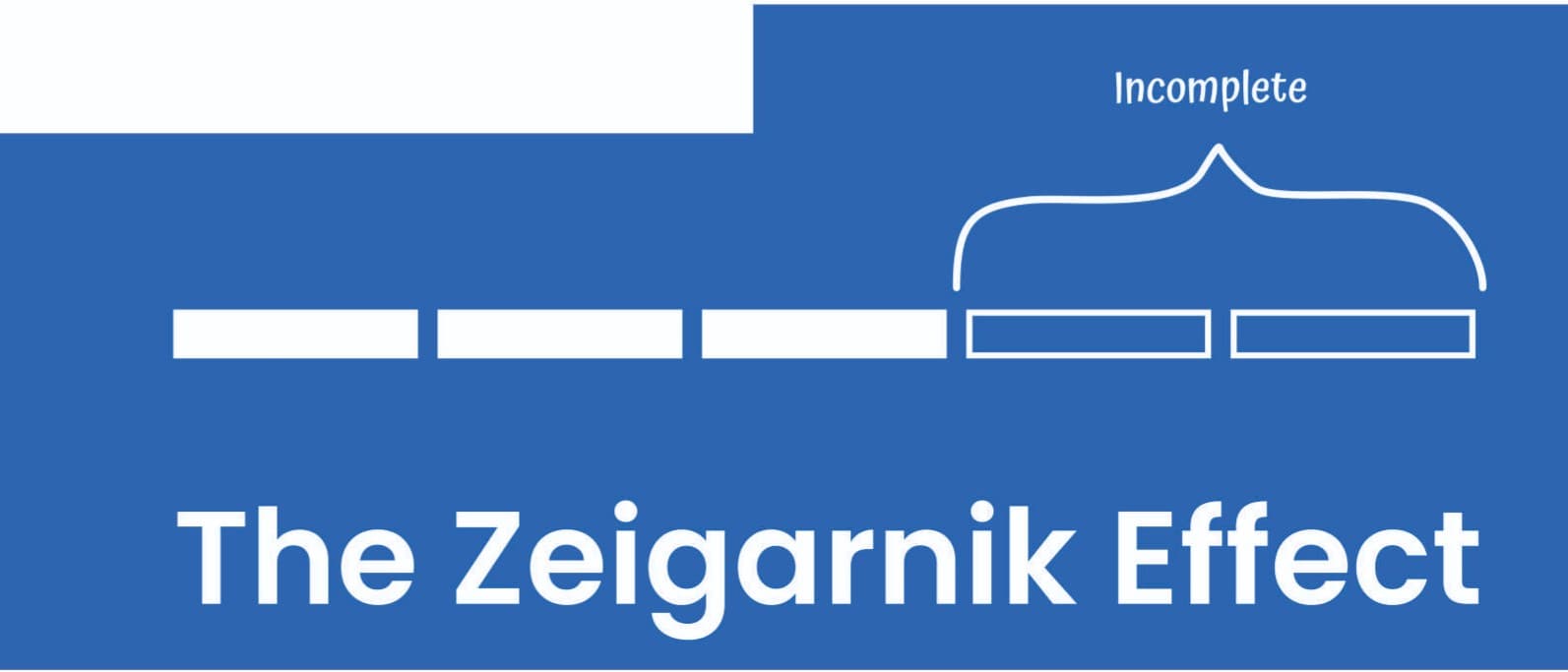
It is commonly believed and even your own experience of revising for exams might tell you that sessions of uninterrupted concentration can help you to better remember key pieces of information. Indeed, many students will engage in periods of “cramming” – intensive revision just before a test – in the belief that essential subject facts and figures will be memorized ready for exam day. However, this commonly held wisdom has been challenged by research conducted by a Lithuanian psychologist Bluma Zeigarnik who found that people recalled unfinished or interrupted tasks 90% better than completed ones. It was as if the brain, unsatisfied with loose ends, kept a mental “open tab” until closure was achieved. This became known as the Zeigarnik Effect, a cornerstone in cognitive psychology that shed light on how tension, memory and motivation are interwoven in the human mind.
The Zeigarnik Effect is the mind's built-in reminder system, a kind of psychological auto-loop that keeps circling back to unfinished goals. When a task is left incomplete, your brain creates a mild cognitive tension, urging you to return and resolve it. Completion, on the other hand, brings closure and releases that tension.
The Effect also explains why cliffhangers work in movies, why unfinished stories linger in memory and why we can't rest easy with unresolved issues. It's the same cognitive mechanism that drives us to seek closure, not just in work but in relationships, ambitions and self-growth.
Premium Content
Continue reading with unlimited access to exclusive insights, analysis, and expert perspectives.
Subscribe to unlock this article and more features