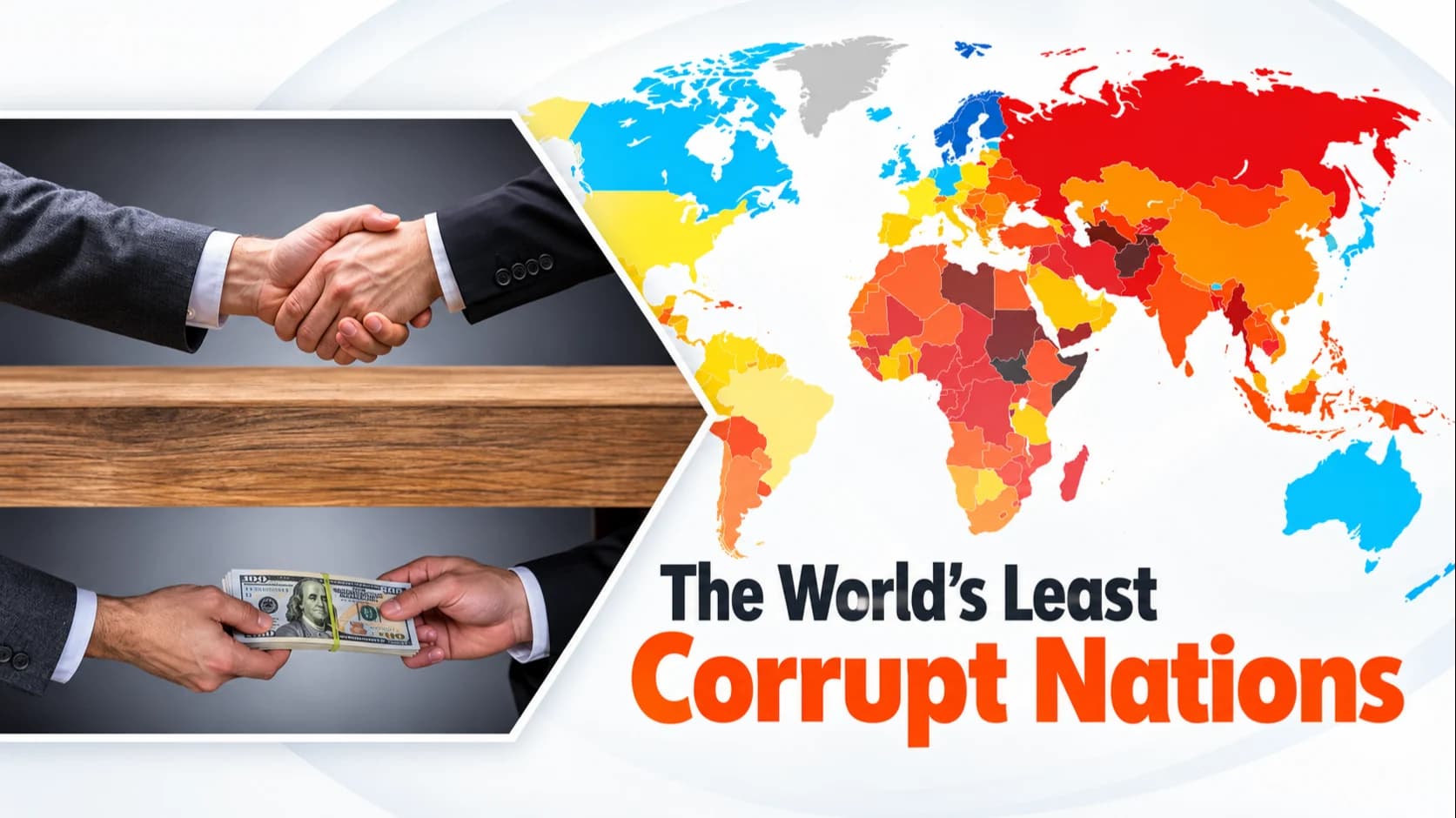
We live in a world consistently challenged by corruption, a widespread issue that often begins at the highest levels of power and trickles down, eroding trust and fairness in society. However, some nations stand out as leaders in combating this universal problem, showcasing robust policies, transparent governance and unwavering commitment to accountability. Countries like Denmark, Finland and New Zealand are frequently recognized for their low levels of corruption.
The Corruption Perceptions Index (CPI), published annually by Transparency International, provides a comprehensive assessment of public sector corruption perceptions across nations. Below, we spotlight the nations that ranked as the least corrupt in 2024, based on the latest CPI report. The results are given on a scale of 0 (highly corrupt) to 100 (very clean). If more than one country has the same score, they tie in the ranking order, but then the next rank jumps to the position that reflects the number of countries tied.
1. Denmark (Score 90)
Denmark consistently ranks as the least corrupt country in the world, thanks to its strong institutions, transparent governance and active citizen participation in holding public officials accountable. Strict anti-corruption laws and an independent judiciary further bolster its integrity.
2. Finland (Score 88)
Finland's commitment to transparency, press freedom and high-quality education creates a strong foundation for its low levels of corruption. The government's emphasis on equality and open decision-making ensures public trust in its institutions.
3. Singapore (Score 84)
Singapore combines zero-tolerance anti-corruption laws with a highly efficient bureaucracy to maintain its position as one of the least corrupt countries. Strict enforcement and a strong rule of law create a corruption-resistant culture.
4. New Zealand (Score 83)
New Zealand's proactive approach to combating corruption includes robust whistleblower protections and transparent public sector operations. Its strong democratic values and accessible public records foster accountability and public trust.
5. Luxembourg (Score 81)
Luxembourg's efficient public administration, strong financial regulations and commitment to transparency make it a model of low corruption. Its small size and active citizen engagement further enhance accountability.
5. Norway (Score 81)
Sharing fifth place with Switzerland, Norway's high ranking reflects its commitment to ethical governance, transparency and a well-regulated economy. A strong emphasis on social equity and press freedom contributes to its low levels of corruption.
5. Switzerland (Score 81)
Switzerland's transparent financial system and strong legal framework ensure minimal corruption. Its direct democracy model allows citizens to hold leaders accountable, further promoting integrity.
8. Sweden (Score 80)
Sweden prioritizes transparency and accountability in public administration, supported by a free press and strong anti-corruption policies. Public trust in government institutions plays a significant role in its success.
9. Netherlands (Score 78)
The Netherlands boasts a culture of open governance and strong institutional checks and balances. Its emphasis on transparency in public contracts and political financing reinforces its low corruption levels.
10. Australia (Score 77)
Australia's stringent anti-corruption laws and commitment to public sector accountability make it a leader in combating corruption. Its free press and active watchdog agencies play a critical role in maintaining transparency.
The writer is a member of staff.