Political Charisma in the Digital Age

by
Political Charisma in the Digital Age

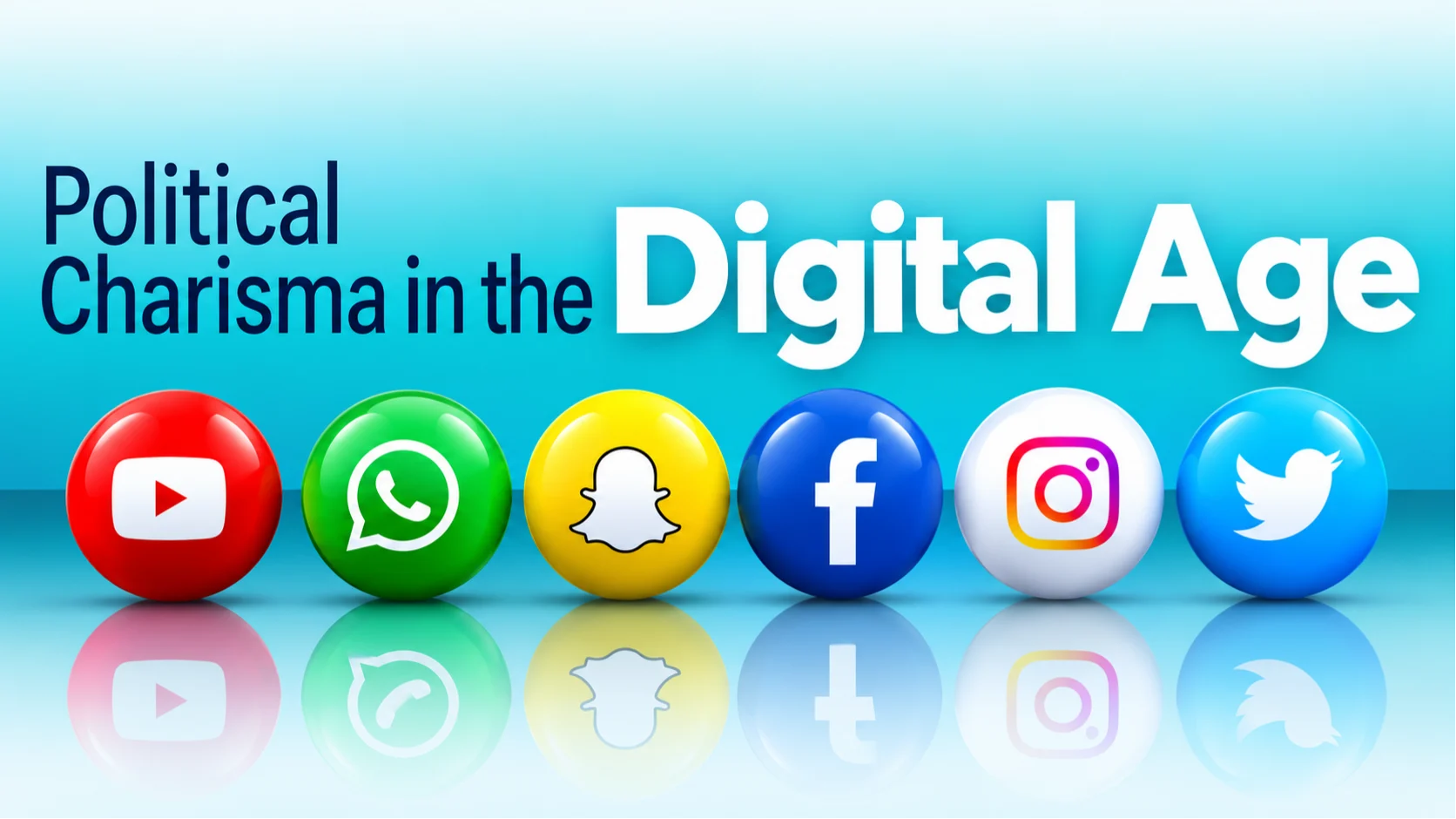
Political communication, which, according to Harold Lasswell, is the study of how political actors use communication to influence their audience and produce political impacts, has undergone a massive change in the past decade due to the rise of digital platforms such as 'X', Facebook, TikTok and Instagram. Normative forms of campaigning – for example, speeches, rallies, radio, newspapers and television – migrated to digital platforms where political charisma no longer remained an organic attribute, but was transformed into a manufactured, amplified discursive formation that is defended online. Political influence within digital ecosystems is measured by retweets, hashtags, memes, shares and emotional resonance, not by policy expertise and institutional performance. For example, political leaders in Pakistan trend daily through intriguing hashtags, e.g. #ReleaseImranKhan, #MaryamBasantFestival, #ZardariReturns #VoteKoIzzatDo, which become a metric for political legitimacy. Although this phenomenon is growing in the world, it deepened in Pakistan with the digital mobilization of Pakistan Tehreek-e-Insaf (PTI). This article argues that charismatic politics intersects with digital media to produce powerful yet deeply polarized political dynamics.

Political Charisma

Political scholars argue that political charisma is a form of personal authority that is derived from perceived exceptional qualities. According to Max Weber, charismatic authority is derived from a magnificent personality or personal grandeur. The characteristics that define charismatic authority are extraordinary powers, revolutionary and visionary, constant validation, emotional connection and irrational behavior. John B. Thompson suggests that charisma in digital spaces is a mediated visibility; it is a strategically produced phenomenon. The main features of political charisma on digital platforms are maintained and sustained through image management, continuous performance and mobilization through feeling. In Pakistan's digital platforms, Imran Khan is portrayed in meme culture as “Sadiq aur Ameen”, and “the only brave leader”. Similarly, he is depicted as morally exceptional and divinely guided through short viral clips or reels of his speeches. In the digital age, charisma has become more of a social media product. It is a product that is carefully engineered, consistently refreshed and algorithmically amplified. For example, in order to sustain his charismatic imagery, there are hundreds of TikTok videos showing Imran Khan entering rallies in slow motion with dramatic background music. Social media channels not only become the feedback loops but also reward emotionally charged content with viral traction. Effective and efficient use of these channels helps to gain and grow digital political charisma.

Algorithmic Amplifications

The architecture of digital platforms from 'X' to TikTok is designed in a way that plays an active role in shaping political narratives. Modern social media feeds are not chronological but algorithmic. These feeds are curated based on attention-maximizing methods. These methods provide emotional content, consistent engagement and repeat interactions. For example, on May 9, 2023, emotionally charged reels and clips were circulating on social media that contained protests, confrontations and burning buildings. This content was algorithmically amplified, which led to intensified polarization. Eli Pariser, in his book “The Filter Bubble,” emphasizes that this happens due to 'personalized algorithms.' For example, on 'X', content is systematically ranked, which amplifies certain political messages over others and aids in shaping political discourse in users' timelines. Often, this kind of discourse is disproportionate. For instance, during the Basant Celebrations 2026, Instagram was overwhelmed with reels showing kite flying and festival visuals. This gave an impression as if the entire city of Lahore was immersed in festivities. However, the amplification was largely formed by media houses and social media influencers. The festivities were celebrated in and around the Walled City, but the algorithmic imagery produced a spectacle of city-wide participation. Moreover, political messaging revolved around the cultural revival, suggesting that it could translate into electoral appeal. Similarly, the repeat-sharing drives algorithmic visibility, which generates echo chambers for like-minded people who see what they already believe. This kind of digital content provokes strong affective responses regardless of factual accuracy, which translates into:

viral political slogans,

meme-driven narratives,

reinforcement of group identities and moral polarization,

reduced exposure to alternative perspectives, and

increased visibility to disinformation.

Charisma Cultivation through Digital Platforms in Pakistan

In the context of Pakistan, PTI offers an intriguing case of political charisma driven through digital platforms. PTI has constructed sophisticated digital political ecosystems over the past decade, especially leveraging 'X', YouTube and Facebook. Political narratives and messages are circulated through hashtags, live streams and viral clips. The party organized social media teams and volunteer digital warriors. They coordinate hashtag trends at specific times that ensure visibility dominance. This facilitates establishing a direct, emotionally charged relationship between the leader and supporters. This usually bypasses the traditional media. Scholarly studies have revealed that the party has successfully reframed political engagement through magnifying Imran Khan as a force of change rooted in moral grounds. For example, Imran Khan's addresses via YouTube and 'X' spaces reinforce a perception of authenticity. The most critical juncture surfaced when Imran Khan was arrested and imprisoned. This started a wave of hashtags, reposts, arguments and counterarguments demanding justice and depicting him as a victim of political persecution. Digital political discourse presented him as a resilient, morally superior figure, thereby further fortifying his charismatic narrative of the fight. For instance, hashtags #FreeImranKhan and #WeStandWithImranKhan trended globally, transforming his image as an ethically unshakeable person. Most of the time, comparing him with historical Islamic warriors in pursuit of legitimizing his political struggle. Though this dynamic exposed a paradox, despite intense online mobilization, the physical mobilization remained limited and fragmented. Empirical evidence suggests that people have shown their political inclination through electoral votes, but street politics occur sporadically. This has not translated into a nationwide occupation of the public domain as compared to traditional revolutionary methods. It suggests that this phenomenon has created only digital loyalties rather than a mass mobilization. In the recent chain of events, we are consistently seeing hashtags and trends related to Imran Khan's eye issue. It is a human rights issue and must be dealt with seriousness. PTI's leaders, social media warriors, and followers have not taken any concrete steps yet through public demonstrations and protests. They have only engaged in collective action on social media. Charisma cultivated on digital platforms relies on performative resistance rather than policy-oriented change. However, charismatic politics driven by digital platforms is equally found in the United States (US) and Indian politics. In the US, during the 2016 elections, social media was used for creating emotional resonance and personalized messaging in favor of Donald Trump. In the same way, the Bharatiya Janata Party (BJP) leveraged the use of social media to disseminate narrative-based memes and content in favor of Narendra Modi.

Perils Related to Charisma Cultivated on Digital Platforms

It is a fact that the digitization of politics has provided the masses with a unique platform to participate in political discourse, but it has some perils. In Pakistan's political culture, there is a limited tolerance for dissenting opinions in physical and online spaces. When political discourse migrates online, the norms of arguments and counter-arguments are replaced by reposts and retweets. This changes the debate less into a constructive synthesis and more into a competition to win. Journalists, civil society actors, and academics face frequent trolling and online harassment for expressing critical opinions about leaders. In a similar vein, Eli Pariser opined that social media encourages echo chambers that reduce exposure to diverse and dissenting views. Digital spaces turned into a nexus of ideological insults and character assassination, where supporters often block or mass-report opposing accounts. This leads to radicalization of opinion, hostility and intolerance. Political charisma in the digital age is mobilized more on emotional connection than rational deliberation. Social media algorithms prioritize engagement, which is often driven by outrage, fear and moral reinforcement. Emotionally charged content outweighs deliberative debate and leads to identity-based polarization. For example, people are labelled, “You are Youthiya”, accusing the other group of being “A Patwari”. Disagreements that should be exchange of ideas become moral betrayals and grounds for radicalization. Furthermore, digital platforms become a playground for memetic warfare where political forces deploy memes, slogans and videos to dominate narratives. Memes showing opponents as foreign agents, traitors and corrupt circulate daily, which strengthens identity-based hostility. The supporters of one group defend their leadership, attack, abuse and ridicule critics, and defend narratives of heroism and betrayal. The energy only expands online and often fails to transform into meaningful institutional transformation. Political debate heavily revolves around defending or attacking personalities like Imran Khan, Nawaz Sharif and Bilawal Bhutto instead of institutional reforms. Moreover, it also gives strength to manufactured content and propaganda through emotive digital messaging, reinforcing chosen narratives and marginalizing neutral discourse. Similarly, digital charisma leads to shifting loyalties towards individuals rather than institutions, which is dangerous for political stability.

Towards Healthier Social Media Discourse

In order to create a healthier social media discourse, there is a dire need for digital literacy and critical engagement. Citizens should learn to assess social media content critically. This helps to distinguish emotionally manipulative content from substantive political content. Furthermore, people need to engage respectfully on social media to understand dissent or alternative perspectives. Similarly, political legitimacy should be derived from institutions rather than online popularity. However, Pakistan is going through political instability, where a massive trust deficit exists between the masses and institutions. Moreover, traditional political discourse, such as parliamentary debates and policy discussions, should not be replaced by hashtags and viral traction. Democratic institutions and norms that follow the essence of democracy can provide a counterbalance to individual charisma.

Conclusion

Political communication has transformed with the rise of digital platforms. The phenomenon of charismatic politics that rests on personal mystique and performative authority has changed into charisma mediated through visibility. It relies more on constructed and engineered narratives, creating emotional resonance among the masses. In this wake, leaders are not judged by institutional performance and policy competence but are measured through engagement, metrics and viral traction facilitated by algorithms. Nevertheless, this massive shift has empowered voices, but it has deepened political polarization, eroded constructive dialogue and heightened digital loyalty. Political charisma enhanced by a digital platform has made politics more of a competition for attention than for ideas and institutional change.

The writer is an MPhil scholar, a Data Science enthusiast & Lifestyle Medicine Activist Iqrarz2009@live.com

Read more on Exam Pack or related topics

About the Author