The Rise & Fall of the Liberal International Order

The Rise & Fall of the Liberal International Order

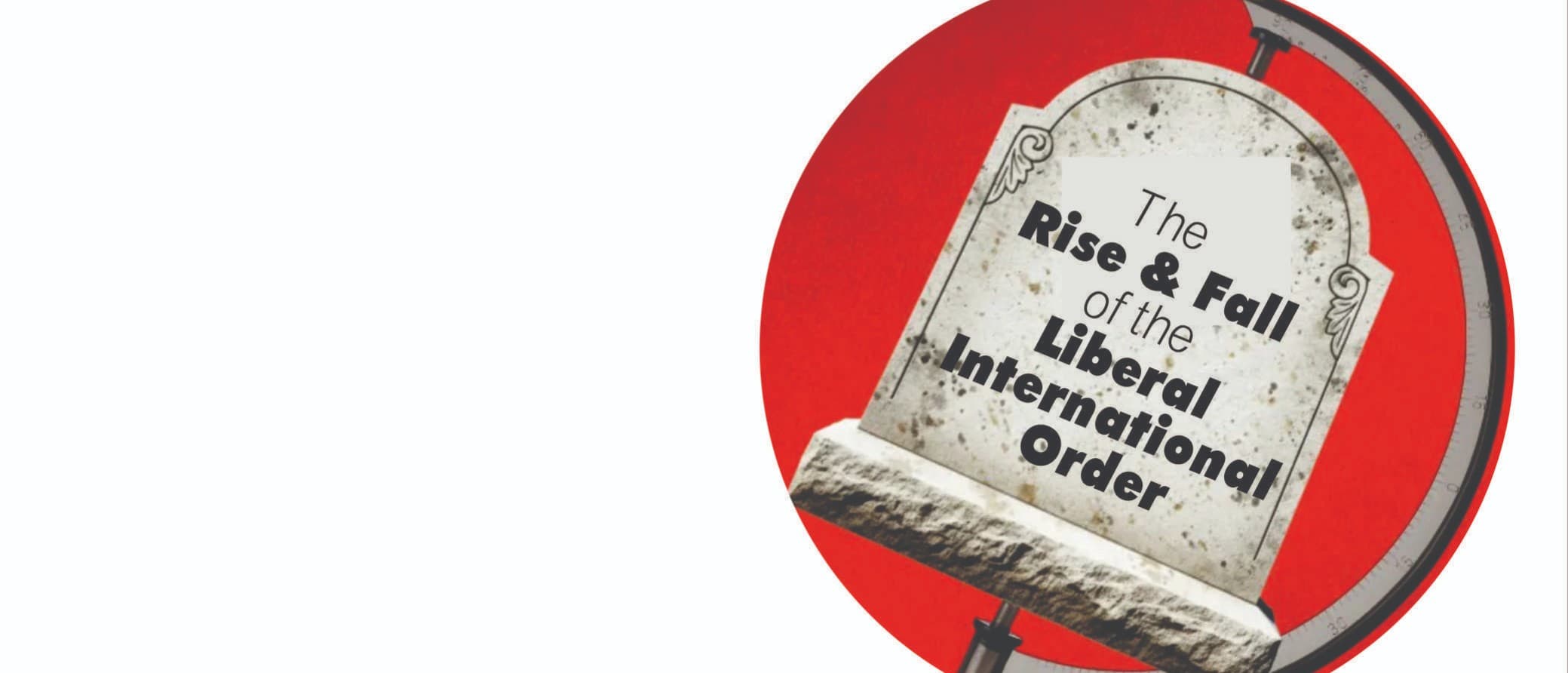
Summary. Is there such a thing as a “liberal international order” anymore? The most succinct and terse answer to this question is: No. And this is not without a reason. Reports from the past few weeks suggest that it was killed off by US President Donald Trump, who joined Israel in an all-out war on the Islamic Republic of Iran without any legal basis or rationale. In pursuit of his America-First agenda, Trump has thrown out the rulebook on trade, international relations, respect for human rights and, as we have seen with the bombing of Iran, the use of lethal force against sovereign states. So, is this the end of the liberal international order, or will other liberal states be able to salvage something from the geopolitical wreckage?

For the past 80 years or so, the United States has been a vociferous advocate of a liberal international order – a framework of shared norms, principles and institutions established after World War II to guide state behavior, aiming to promote stability, peace and economic cooperation through multilateralism rather than brute force. It emphasizes democracy, human rights and rule-based trade. The idea was simple. States should respect sovereignty. Wars should follow international law. Organizations like the United Nations should restrain the reckless use of power. This framework, though imperfect, helped shape the international order for many years. Advocates argue that this framework has provided the foundation for decades of stability and prosperity. Great powers sometimes did break the rules, but they still felt the need to justify their actions in the language of international law. That system is now in deep trouble. Developments in recent years have shaken its foundations.

But, before we move on to write an elegy for this long-cherished order, it seems apt to have a peep into its history and how it fared over the past eight decades.

From natural disasters to deadly diseases and wars, the world can be a turbulent, even chaotic, place. Especially after World War II—the deadliest conflict in human history—the need for such a system was felt that would ensure the world never again devolved into such horrific violence. Responding to this immediate need, world leaders created a series of international organizations and agreements to promote global cooperation based on a system known as the liberal international order. This was a system of multilateral laws, agreements, principles and institutions to manage relations between states along liberal lines. The system developed under American leadership after the end of the Second World War with the UN and the Bretton Woods institutions as its core pillars. In this liberal international order, rules were to be applied to each country equally and it encouraged each country to be democratic and to open its economy to the rest of the world.

Premium Content

Continue reading with unlimited access to exclusive insights, analysis, and expert perspectives.

Subscribe to unlock this article and more features

Read more on Exam Pack or related topics

About the Author