Print subscription includes a free wall-size coloured map.Special offer: Subscribe Now (Print) and Get Free Wall Size Coloured Map!Subscribe Now
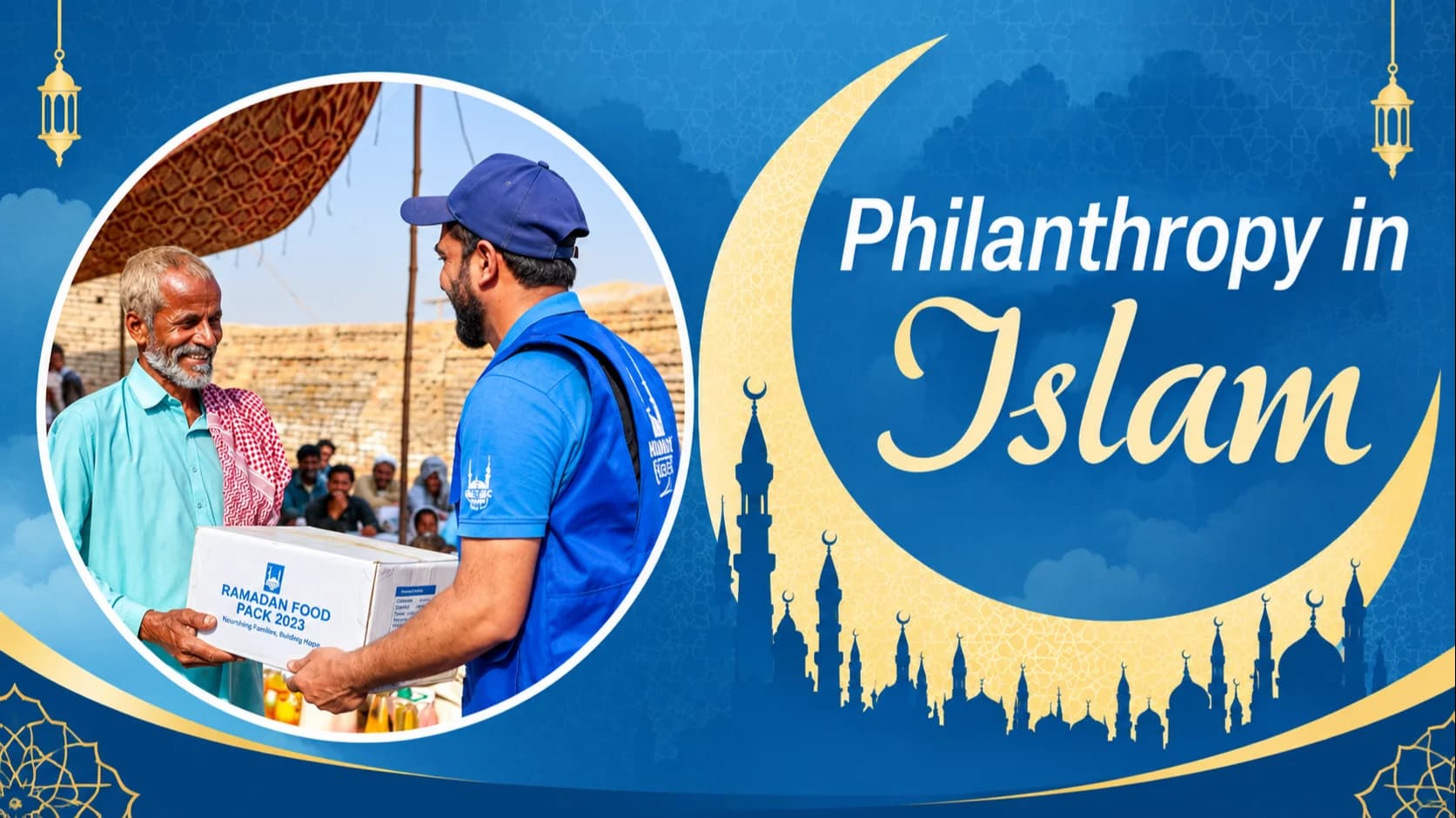
Summary. Generosity is an essential part of a Muslim's conduct
The foundation of human society rests upon mutual love, sacrifice and welfare, and Islam exhorts its followers to be generous and the ones who spend in the way of Allah Almighty. The equality of people, justice and peace are the major guiding principles of human actions and relationships in Islam. In Islam, serving humanity is not only regarded as a moral virtue but has also been elevated to the status of worship. Like other world religions, Islam is opposed to great inequalities in the distribution of material resources. Some of its key teachings relate to reducing, though not necessarily eliminating, social and economic inequalities. Islam enjoins its followers to 'give' for individual and collective wellbeing. This is what we call philanthropy.
It is widely known that every religion has philanthropic components to it, and Islam is no exception. Islamic injunctions make the act of charity obligatory for its believers. That is why philanthropy is deeply rooted in the Islamic faith. There are a number of terms found in the Quran that are often understood to be examples of a more expansive notion of philanthropy. These include zakat, sadaqa, amal al-salihat (good deeds), khayr (goodness) and ihsan (virtue).
Islam, having tawhid or the 'Oneness of Allah' as its fundamental principle, literally means peace; also, submission. Thus, it implies inner peace through submission to the Will of Allah Almighty (peace of mind) and physical peace through good deeds to each other (peace of body). The latter part is known, in modern-day parlance, as philanthropy.
In its essence, philanthropy (khidmat-e-khalq) is the spirit of serving humanity and helping those in need. It truly means working for the betterment of mankind, helping others, fulfilling the needs of the needy and spreading goodness in society.
In Islam, philanthropy is not merely a social virtue but a core religious obligation that strengthens bonds of brotherhood, compassion and justice in society. The Quran and Sunnah consistently emphasize the importance of charity (sadaqah), almsgiving (zakat) and selfless service as a means of purifying wealth, heart and soul.
Philanthropy, in simple words, signifies acts done for the welfare of mankind. Every religion has philanthropic components to it; however, Islam takes this a step further by making some forms of it compulsory. Islam lays great emphasis on supporting the destitute. The overarching themes for acts of charity in Islam are rooted in two basic principles: developing compassion for others and demonstrating kindness towards each other.
"Those who spend (in charity) their wealth by night and by day; in secret and in public, have their reward with their Lord 'there is no fear for them, nor shall they grieve'.” (al-Baqarah: 274)
Hazrat Uthman ibn Affan (RA), the third Caliph who ruled the Muslim empire, and a close companion of the Prophet Muhammad (PBUH) is a prime example of Islamic philanthropic values. In around 650 CE, during severe drought and food shortages in Madinah, he (RA) sent a caravan of 1,000 camels with urgently needed supplies to people suffering in the harsh conditions. Despite receiving lucrative offers from merchants to gain business profit, he chose to donate all the goods to the people free of charge, knowing the ultimate reward comes from Allah for helping those in need.
The lesson from this story emphasizes that humanity should come before profit in the context of business and leadership during times of hardship.
The Quran and Sunnah declare in clear words that it is the responsibility of the wealthy to look after the deprived sections of society. Hence, philanthropy is a fundamental principle in Islam, serving as a way to purify wealth and express gratitude to Allah. Muslims are encouraged to give generously to those in need, and there are many different forms of charity that can be practiced. Islam regards philanthropy as a divine command rather than a voluntary choice. Zakat—one of the five pillars of Islam—is the most structured form of philanthropy, requiring Muslims to give a fixed portion of their wealth annually to the poor and needy. Allah Almighty says in the Quran:
“Establish prayer and give zakat, and whatever good you put forward for yourselves—you will find it with Allah.” (al-Baqarah :110)
This verse highlights that zakat is not only an act of worship but also an investment in one's spiritual future.
It is the responsibility of every Muslim that in meeting his needs, he should act in a balanced way, so that he may not spend all his wealth on his personal needs only, but that it is his duty that he should let others also partake of the blessings which Allah has bestowed on him, and that he should allot a part of his wealth for the help and assistance of the poor and needy persons. Allah's Messenger has said:
"O Adam's son! Spend your wealth, it is good for you. And do not block it, it is bad for you, and the wealth according to the need cannot be reproached. Spend first for your family and dependents, and the raised hand is better than the lowered hand." (Sahih Muslim)
Philanthropy, in Islam, is of two kinds: obligatory and voluntary. Obligatory philanthropy consists of Zakat and zakat-ul-fitr or fitrana; whereas, voluntary philanthropy includes the institutions of sadaqa and waqf.
a. Zakat is the share or portion of wealth that is obligatory upon a Muslim to give to fixed categories of beneficiaries, if the value of his assets is more than a specified limit (i.e. Nisab). The beneficiaries of Zakat are mentioned in the Quran:
“(Zakat) charity is only for the poor, and the needy, and those employed to administer it, and those whose hearts are made to incline (to truth), and (to free) the captives, and those in debt, and in the way of Allah and for the wayfarer” (at-Tawbah:60).
b. Zakat-ul-fitr, or fitrana, is the charity which every Muslim having a certain amount of wealth pays at the end of the month of Ramazan. Zakat-ul-fitr is mandatory for every Muslim, not only on his own behalf, but also on behalf of all the persons he is in charge of.
c. Sadaqa not only means charity in the form of money or food, but includes every act done for the benefit of fellow men. The Prophet (PBUH) said:
“Every act of goodness is sadaqa”; and “there is a sadaqa due on every Muslim. If he cannot give because he has no money, let him work so he can support himself and give charity; if he is unable to work, then let him help someone in need of his help; if he cannot do that, let him adjoin good; if he cannot do that, then he should not do evil or harm others: it will be written for him as a sadaqa.”
d. Waqf is the permanent dedication, by a Muslim, of any property for any purpose recognized by Islamic law as religious, pious or charitable. Waqf causes the transfer of ownership of the thing dedicated, to Allah. But as Allah is above using or enjoying any property, its profits are reverted, devoted or applied to the benefit of mankind.
The Islamic institution of waqf has a wider scope and purpose than that of a trust in the English law. The institution became so popular and important in Islamic countries that, in most of them, a special ministry was established to deal with the administration of waqf properties.
Philanthropy in Islam is not limited to material giving. It purifies the soul from greed, arrogance and selfishness. The Quran states:
“Take from their wealth a charity by which you purify them and cause them to increase, and invoke blessings upon them.” (at-Tawbah:103)
Thus, philanthropy becomes a form of self-purification (tazkiyah), nurturing humility and empathy within the giver.
Philanthropy ensures the circulation of wealth and reduces inequality in society. It protects the vulnerable, empowers the poor and fosters a culture of solidarity. When the wealthy fulfil their obligation towards the needy, society becomes free from exploitation, class conflict and resentment.
In early Islamic history, philanthropy shaped the welfare model of the Muslim community. The institution of Bayt al-Mal (public treasury) was established to distribute zakat, sadaqa, and other charitable contributions, ensuring social justice and public welfare.
The Prophet Muhammad (PBUH) emphasized the concept of sadaqa jariyah—ongoing charity that benefits people even after one's death. He said:
“When a person dies, all his deeds come to an end except three: ongoing charity, beneficial knowledge or a righteous child who prays for him.” (Muslim)
Building schools, hospitals, wells or any form of community service that benefits generations falls under this category.
In today's world of widening inequality, Islamic philanthropy remains a timeless solution. By fostering a balance between wealth and poverty, it creates a fairer economic system and nurtures a compassionate community. Muslim societies are called upon to revive this spirit of generosity and institutionalize philanthropy to address modern challenges like poverty, illiteracy and health crises.
Philanthropy in Islam is not a mere act of kindness; it is a form of worship, a social responsibility and a pathway to spiritual elevation. Through zakat, sadaqa, infaq and sadaqa jariyah, Islam establishes a comprehensive system of giving that benefits both the individual and society. When practiced sincerely, philanthropy transforms wealth into a means of serving Allah's creation, thereby earning His pleasure.
The writer is a lecturer at a private sector university.
Topics