Print subscription includes a free wall-size coloured map.Special offer: Subscribe Now (Print) and Get Free Wall Size Coloured Map!Subscribe Now
With each passing day, it is becoming increasingly clear that the rules-based liberal world order is in its terminal stage. All foundations of this cherished order – respect for territorial integrity, sovereign independence, conflict resolution through UN-stipulated mechanisms, non-protectionist trade policies, democratic ideals, human rights, avoidance of using war as an instrument of foreign policy and adherence to international law – are being dismantled rapidly. Worse still, the very state that spent trillions of dollars on strengthening a rules-based world order is itself destroying it. US President Donald Trump, who rode on a populist wave to enter the White House for the second time, is now determined to remove whatever is left of the post-World War order. From expansionist ambitions in South America and the Arctic region to providing legitimacy to Israel's cruelty in the Middle East, he is driving the world towards an era reminiscent of pre-World War I. However, Trump is not the first US president who uses brazen force to protect perceived US interests; all administrations have attempted to maintain America's exclusive sphere of influence in the Americas and Western Hemisphere. Therefore, it would be wise to look at history briefly before we discuss Trump's expansionist ambitions.
Manifest Destiny and the Monroe Doctrine have been the two policy pillars in US foreign policy for ages. These two elements have always convinced the US administrations to acquire new territories and maintain a hegemonic status in the Western Hemisphere. Particularly, the idea of Manifest Destiny, coined by John L. O'Sullivan in 1845, attempted to project that it was the right of the US to overspread and possess the whole American continent for the development of liberty and federated self-government.
Even before the mainstreaming of this concept, the US government engaged in ceaseless wanderlust to accommodate the rising population. For instance, Thomas Jefferson's Louisiana Purchase (1803); the War of 1812, whose one underlying objective was to capture Spanish Florida along with the motivation to annex Canada; and the annexation of Florida (1818) that led to US claims over the Northwest Pacific, as Spain renounced Oregon Country, are some examples which clearly show that expansionism has always been part of the American experience. The most notorious and completely unjustifiable expansion happened when President James K. Polk declared war on Mexico in 1846 over a border dispute, which culminated in the signing of the Treaty of Guadalupe Hidalgo (1848). Under the treaty, Mexico was forced to cede its 1,360,000 km² area to the USA, which today makes the states of Arizona, California, Colorado, Nevada, New Mexico, Texas and Utah. This forcible annexation is still the cause of irritation between Washington and New Mexico. Though expansionist ambitions hit a roadblock due to sectional divide within the USA over the question of slavery, the concept of Manifest Destiny resurrected after the American Civil War, causing intense exploration of foreign territories under the Mahanian Doctrine that urged the US to seek control of the international war in the 1890s. Consequently, the Spanish-US War (1898) ended with the US acquiring the Spanish territories such as Guam, Puerto Rico and the Philippines. Similarly, the USA also annexed Hawaii, providing the US Navy a desirable port facility at Pearl Harbour and effectively converting the USA into an imperialistic and global power.
In the first half of the twentieth century, the United States stopped short of acquiring new territories. Soon after the Second World War, it annexed the Mariana Islands, Caroline Islands and Marshall Islands in 1947; however, the Marshall Islands, Federated States of Micronesia and Palau became independent nations later, and the Northern Mariana Islands decided to become a self-governing US commonwealth in 1986. So, now that President Donald Trump intends to annex Greenland, or acquire the Panama Canal, or when he nudges Canadians to join the USA as the 51st US state, historians aren't surprised at all. It has been in the DNA of the USA to practise irredentist and expansionist foreign policy.
In addition to Manifest Destiny, the Monroe Doctrine can explain the relentless assertion of President Trump to have pro-US regimes in South and Latin America. This doctrine, first proclaimed by President James Monroe in 1823 wherein he announced that the USA would not allow European meddling in the Western Hemisphere, was invoked on several occasions. For instance, President John Tyler denounced British interference in Hawaii in 1842, and President James K. Polk also used it during the Mexican-American War. Given the fact that the USA was a marginal power in the 19th century, the European powers didn't take the Monroe Doctrine seriously. However, the country emerged as a global industrial and military power in the late 19th century, allowing the successive US administrations to invoke and extend this doctrine on multiple occasions. Theodore Roosevelt's 1904 Corollary to the Monroe Doctrine has been a notable example. The USA intervened in Cuba, Panama, Honduras, Haiti, the Dominican Republic and Nicaragua through the 1910s, 1920s, and 1930s under the pretext of stabilizing finance and deterring European interference in what Washington dubbed as America's backyard (the so-called Banana Wars). During the Second World War, President Roosevelt ordered the US troops to invade Greenland to deny Germany any space there, and he kept Greenland under occupation until the formulation of NATO in 1949 (the US kept a significant number of troops in Greenland during the Cold War under the pretext of Arctic security and currently, there are around 150-200 troops there for missile defence and space surveillance). President John F. Kennedy also invoked the Monroe Doctrine symbolically during the Cuban Missile Crisis of 1962 to deter the USSR from gaining a foothold in Cuba. Later on, President Ronald Reagan justified the 1983 Grenada invasion under this doctrine, and President George H.W. Bush also cited this doctrine when he launched the Panama operation to oust Manuel Noriega. Overall, over 40 US interventions are said to have “succeeded” in toppling regimes in the past one and a half centuries, revealing a well-entrenched US practice in Washington's foreign policy.
This brief overview of US history clearly indicates that expansionism has always been the key pillar of US foreign policy. Now, we look at the underlying motivations and implications of the Donroe Doctrine, the Trump Corollary to the Monroe Doctrine. In this regard, the National Security Strategy 2025 (NSS) is an important document, outlining principles and priorities that the Trump administration is going to pursue.
The NSS has clearly prioritized the Western Hemisphere as an area of strategic importance, unambiguously invoking the expansionist and hegemonic Monroe Doctrine to restore American preeminence in the Western Hemisphere. The NSS aims to achieve these broad objectives through enlisting and expanding partnerships in the region. This strategy has now effectively entered the implementation stage with military strikes over Venezuela and the capturing of President Nicolas Maduro and his wife.
Operation Absolute Resolve – launched on January 3, 2026 – was a well-thought-out strike, intending to gain multiple strategic objectives.
First, Trump has undermined, to a great extent, the increasing Chinese influence in Venezuela, as China has invested heavily in energy and infrastructure there to convert Caracas into a crucial node for the extension of the Belt & Road Initiative in Latin America.
Second, Venezuela has abundant oil and gas reserves; in fact, it has the world's largest proven oil reserves, the ninth-largest gas reserves, and vast untapped minerals, including gold – Trump has not hidden his oil and mineral lust at all; he has made clear that the USA intends to exploit the oil and mineral wealth of this Latin American country.
Third, overthrowing Maduro government would serve as a deterrent to other South and Latin American countries, which are attempting to pursue an independent relationship with China and other major countries outside the region.
Fourth, this aggressive US posture would bolster rising populist sentiments in the region, which are being inspired by the right-wing tendencies of President Trump – In 2025, right-wing presidents won elections in Ecuador, Bolivia, Chile and Honduras. Brazil, Colombia, Peru, and Costa Rica are set to hold presidential elections in 2026. Therefore, the Donroe Doctrine would influence the political landscape in the whole region, building a pro-American bloc and exclusive US preeminence, if not predominance, in the South, Latin, and Caribbean regions.
After Venezuela, Colombia is likely the next to be subjected to the Donroe Doctrine. Trump has accused Colombia of narco-terrorism. Colombian President Gustavo Petro is also the loudest critic of Trump's policies.
Similarly, Nicaragua is also facing the heat of the Donroe Doctrine. Its government has long been seen by the USA as a trilogy of dictatorships with Cuba and Venezuela. The US has also recently designated Nicaragua as a key drug-transit country. However, it is Cuba that sits squarely in Washington's crosshairs if Donald Trump continues to enforce his doctrine in the region.
Cuba and Venezuela have historic ties, stemming from their mutual resistance to US dominance and the communist tendencies of Hugo Chavez and Fidel Castro. For decades, Venezuela provided Cuba with fuel and financing in exchange for teachers, doctors and security personnel, so much so that President Maduro's personal security guards were Cubans. On the other hand, Cuba has long been perceived as a national security threat by Washington. Since the toppling of the US-backed regime by Fidel Castro in 1959, the aborted Bay of Pigs invasion in 1961 and the Cuban Missile Crisis in 1962, Havana has been a thorn in the flesh for the successive US administrations. Therefore, Trump may impose economic sanctions on Cuba to strangulate its communist government or intervene militarily to change its government.
Greenland has also become another deeply contentious issue, driving a wedge between the USA and European countries. Greenland, the world's largest island, is strategically located in the Arctic region. It is a semi-autonomous region that gained the right of self-rule in 2009; however, it relies upon Denmark for foreign policy, defence and funding. The ramping up of Trump's rhetoric to acquire this territory has raised a range of options, including the use of military force, and has caught this Arctic island in a geopolitical storm. Although Trump has been expressing his interest in acquiring Greenland since his first term, the history of US interest dates back to at least 1867, when the United States purchased Alaska from Russia for $7.2 million. At that time, President Andrew Johnson's Secretary of State, William H. Seward, suggested adding both Iceland and Greenland to the USA; however, no formal offer was made to Denmark. Later on, in the 1910s, the then-US Ambassador to Denmark proposed that the US should give the Philippine Island of Mindanao, which was then under US control, to Denmark for Iceland and Greenland. However, when Germany invaded and captured Denmark in 1941, the USA assumed the defence of this island, and after the Second World War, President Henry Truman offered Copenhagen $100 million in gold for Greenland, which Denmark refused. In 1951, Denmark and the USA signed the Defence of Greenland Agreement, enabling the US to build and operate bases for functionalizing NATO collective defence. During the Cold War, America maintained several military bases there; however, now all but the Pituffik Space Base have been closed – The US military uses this military facility to conduct strategic space and hemispheric defence without any interference from Copenhagen.
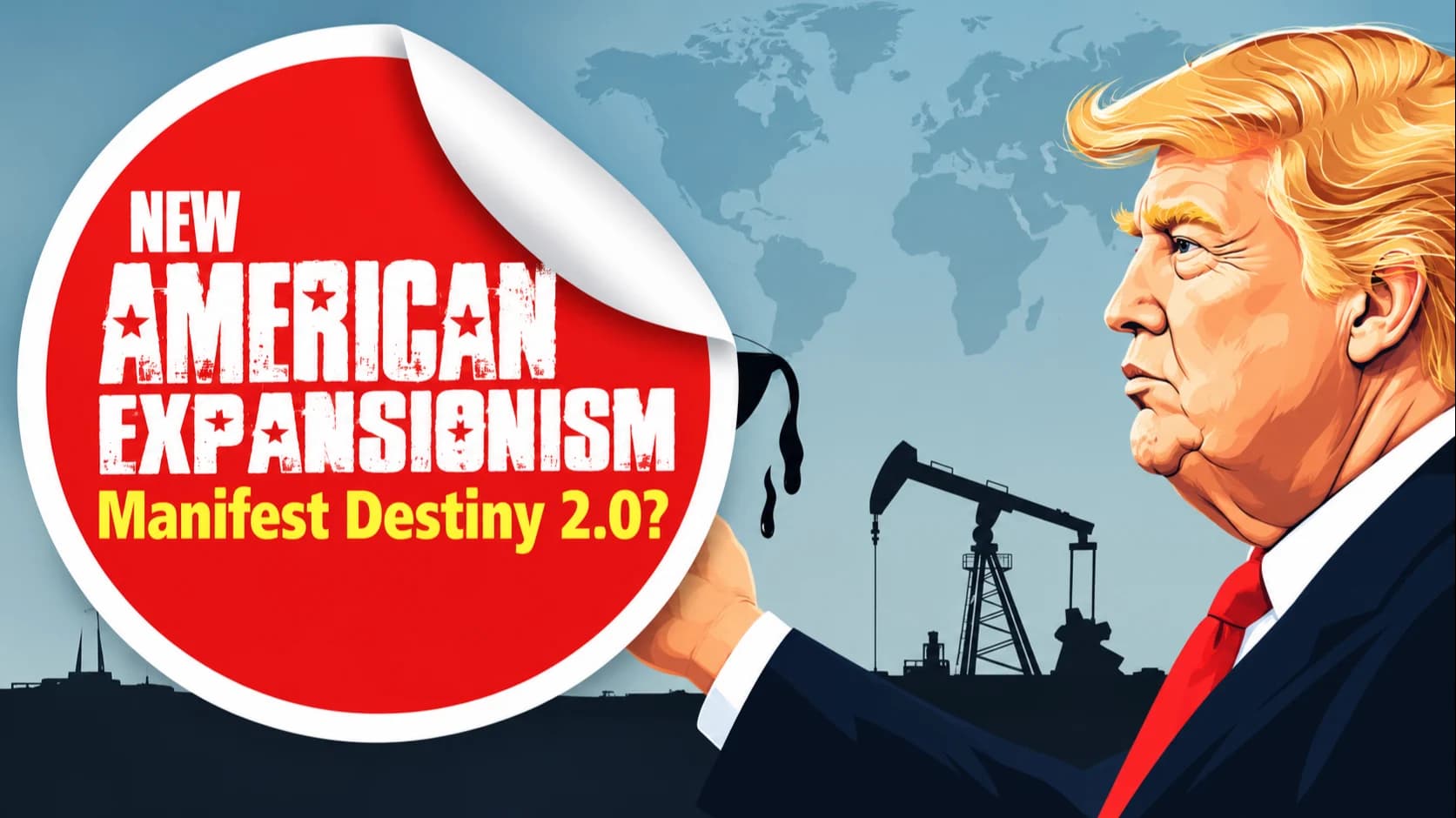
President Trump seems to accomplish this long-unfulfilled American aspiration through what analysts dub Manifest Destiny 2.0. There are multiple strategic and geopolitical factors responsible for renewed US interest in this sparsely populated island, clearly revealing the method in Trump's madness.
Geopolitical position, natural resources and the potential northern shipping route around this island are three interconnected factors, explaining the rising geopolitical and commercial profile of this ice-covered, remote Arctic island. Geopolitically, Greenland sits between Europe and the USA, located at what is termed the GIUK chokepoint, a maritime passage between Greenland, Iceland, and the UK, linking the Arctic Ocean to the Atlantic Ocean. Therefore, it is considered a vital route for the North Atlantic for both security and trade objectives. Since the Second World War, it has been a key outpost for the US military for deterring possible Russian missile attacks and monitoring Russian naval activities via the GIUK chokepoint. More broadly speaking, the Polar and Arctic regions have assumed serious geopolitical significance for China, Russia, and the USA. All major powers are tussling over Arctic territories for new resources, new shipping routes to avoid congested chokepoints of the Panama and Suez canals, and ways to strengthen their global positions. The Arctic Circle has now militarised intensely. The Arctic Council, which was proposed by Mikhail Gorbachev at the end of the Cold War, now stands virtually dissolved. Out of 8 countries that have territories in this Circle, 6 are NATO members, including Sweden and Finland, who embraced the collective security of NATO in the wake of the invasion of Ukraine by Russia, converting the Arctic map into Russian on one side and NATO on the other side, and turning the border between Finland and Russia into effectively a frontline for Russia and NATO. Likewise, one quarter of Russia's territory falls within the Arctic, making it a vital concern for Moscow, and most of Russia's nuclear capabilities are based here. China has also entered the fray, declaring itself as a near-Arctic state in 2018 and launching the Polar Silk Route for Arctic shipping. In terms of trade and transit, this region is melting rapidly, opening up opportunities for exploring Arctic shipping routes as potential alternatives to the hugely congested Panama and Suez canals. Mineral resources, in particular rare earth minerals, are also responsible for Trump's relentless rhetoric on possessing and holding Greenland. Therefore, Trump's ambitions to acquire Greenland have all to do with broader geopolitical competitions and rivalries in the Arctic region.
The implementation of irredentist, expansionist, and hegemonic concepts like the Monroe Doctrine and Manifest Destiny carries huge risks for world peace and security. In particular, the breaking down of norms against the use of force to settle political and economic disputes would undermine the post-World War Two security architecture. Similarly, if the USA goes ahead to acquire Greenland either through military means, economic coercion, or persuasion against the will of Greenlanders, it would create a strong precedent for other regional great powers such as India, Russia, and China to settle their own territorial disputes militarily. Furthermore, attacking a fellow NATO member would definitely put the collective security mechanism of this Western military alliance stipulated in Article 5 under serious strain or cause its overall dissolution. For countries like Pakistan, Trump-led expansionism would generate repercussions that can threaten regional peace and security. Trump has already launched strikes on Iran, and any further misadventure to exploit political disturbance in Iran could put Pakistan's military and political landscape under serious strain, making our delicate balancing act between Beijing and Washington even more difficult.
Succinctly speaking, the resurrection of expansionist and hegemonic foreign agendas like the Monroe Doctrine and Manifest Destiny doesn't bode well for international security, trade, and economy. The breakdown of the rules-based world order favours militarily strong countries, meanwhile putting economically and militarily weak countries in a disadvantageous position. Donald Trump has made absolutely clear that he does not care about international laws and norms; he has made no secret about his intentions to plunder Venezuelan oil and minerals. For the first time in almost a century, he has announced the implementation of the Monroe Doctrine to establish absolute dominance of the USA in the Western Hemisphere. His other actions, including condoning Israel's expansionist ambitions in Gaza and the West Bank, his tendency to give legitimacy to the Russia-led occupation of some regions of Ukraine in exchange for a peace deal, and brazen interventions in the domestic affairs of Iran, are creating dangerous precedents. It seems the complete anarchy and lawlessness at the global stage are just around the corner, where, in the words of Thomas Hobbes, a “war of all against all” situation would prevail. We have no option other than strengthening our defences through alliance-building and beefing up our indigenous military capabilities.
The writer is a graduate of the University of Agriculture, Faisalabad. He writes on national and international affairs.
Topics

The writer is a graduate of the University of Agriculture, Faisalabad. He writes on national and international affairs.