
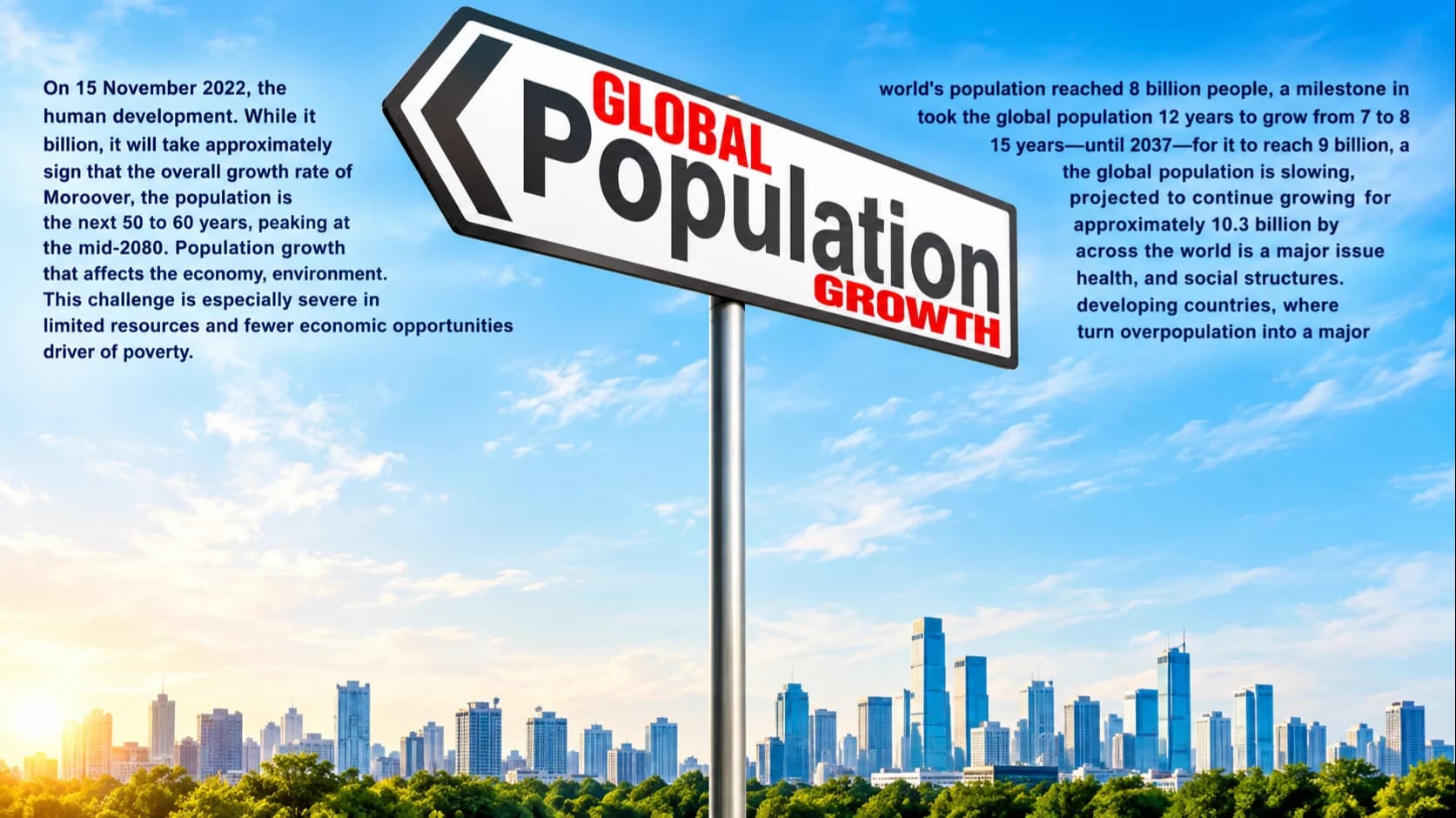
Global population growth is one of the most defining features of our age, shaping economies, societies and the environment. It is often described as a double-edged sword because it brings both opportunities and challenges.
Opportunities
A larger population means a larger workforce, which can drive industrial productivity and technological progress.
Countries with youthful populations often experience what is known as 'demographic dividend', where a high proportion of working-age individuals relative to dependents creates conditions for rapid economic growth.
Nations in sub-Saharan Africa and South Asia are poised to benefit from this demographic advantage if they invest in education, healthcare and job creation.
A growing population also expands consumer markets, stimulating demand for goods and services and encouraging global trade.
In this sense, population growth can be seen as a driver of human creativity and resilience.
Challenges
However, the negative consequences of rapid population growth are equally profound.
One of the most pressing challenges is the strain on natural resources. More people require more food, water and energy and the Earth's ecosystems are struggling to keep pace with this demand.
Agricultural systems must produce enough to feed billions, yet they are constrained by land availability, soil degradation and climate change.
Water scarcity is becoming a critical issue in many regions, particularly in arid zones where population growth is fastest.
Energy consumption continues to rise, much of it still dependent on fossil fuels, which exacerbates global warming.
The environmental impact of population growth is evident in deforestation, loss of biodiversity, pollution, and rising greenhouse gas emissions.
These ecological pressures threaten the sustainability of human societies and the health of the planet.
Urbanization is another consequence of population growth that presents both opportunities and challenges. Cities are hubs of innovation and economic activity, but they also face overcrowding, inadequate infrastructure and social inequality.
Megacities such as Lagos, Karachi, Mumbai and São Paulo struggle with housing shortages, traffic congestion and pollution.
Informal settlements or slums often emerge, where millions live without access to clean water, sanitation or healthcare.
These conditions can foster social unrest and perpetuate cycles of poverty. At the same time, cities are engines of progress, offering education, employment, and cultural exchange.
The challenge lies in managing urban growth in ways that maximize benefits while minimizing harms.
Healthcare systems are also under pressure from population growth.
Larger populations mean greater demand for medical services, vaccines and public health infrastructure.
In low-income countries, where resources are limited, this demand often exceeds supply, leading to preventable deaths and poor health outcomes.
Growing population and inequality
The double-edged nature of population growth becomes clear when considering its impact on inequality.
On the one hand, growth can create opportunities for upward mobility, as expanding economies generate jobs and wealth.
On the other hand, it can exacerbate disparities, as resources are unevenly distributed and marginalized groups are left behind.
Rapid growth in poor countries often leads to entrenched poverty, while declining populations in rich countries can concentrate wealth among the elderly.
Global inequality is, thus, both shaped by and shaping population trends.
The challenge of climate change
Climate change is perhaps the most urgent arena where population growth intersects with global challenges. More people means more consumption, more emissions and greater pressure on ecosystems. Yet population growth also creates the potential for collective action, innovation and adaptation. The question is whether humanity can harness its numbers to confront the climate crisis or whether growth will overwhelm efforts to mitigate it. Policies that promote sustainable development, renewable energy and conservation are essential to ensure that population growth does not lead to ecological collapse. Education and empowerment are critical tools for managing population growth. Studies consistently show that when women have access to education and reproductive healthcare, fertility rates decline and families become healthier and more prosperous. Empowering women and girls is thus one of the most effective strategies for achieving sustainable population levels. Investments in education also create skilled workforces that can drive innovation and economic growth, turning population expansion into an asset rather than a liability.
The case of Pakistan
Pakistan provides a vivid example of the complexities of population growth. With a population of over 241 million, it is the fifth most populous country in the world, adding four to five million people every year. Its population growth rate of 2.4 percent is the highest in South Asia. According to the US Census Bureau, the country's population has crossed an estimated 257 million at midyear, placing it among the world's most populous nations even as its fertility and growth rates continue to decline. The Bureau said, “Despite decades of policy debate, Pakistan is still adding millions of people each year. Its annual population growth rate stands at 1.82 percent, lower than in previous decades but high enough to keep total numbers rising steeply for at least another generation.”
Pakistan's population has grown rapidly over the past decades, and this expansion has created both opportunities and challenges. On the one hand, Pakistan has a youthful population, with a large proportion under the age of 30 years. This demographic structure offers the potential for a demographic dividend, as a young workforce can drive economic growth if provided with education, skills and employment opportunities. On the other hand, rapid population growth has strained Pakistan's resources, infrastructure and social services. Urban centers such as Karachi and Lahore face overcrowding, pollution and inadequate housing. Rural areas struggle with poverty, limited access to healthcare and insufficient educational facilities. Water scarcity is a pressing issue, exacerbated by climate change and inefficient resource management.
The challenge for Pakistan is to harness the energy of its youthful population while addressing the structural problems that rapid growth has created. If managed wisely, Pakistan's population could be a source of strength, but if neglected, it could exacerbate poverty, inequality and instability.
Conclusion
Global population growth is a complex phenomenon with far-reaching implications. It has fuelled economic expansion, cultural diversity and human innovation, but it has also strained resources, exacerbated inequality, and threatened the environment. The double-edged sword of population growth requires careful management, balancing the benefits of human numbers with the challenges they create. As the world moves toward ten billion people, the choices made today will determine whether population growth becomes a driver of prosperity or a source of crisis. Humanity must recognize the dual nature of this phenomenon and act with foresight, compassion and responsibility to ensure a sustainable future for all. Pakistan's experience underscores the importance of this balance, showing how population growth can be both a promise and a peril depending on how it is addressed. By investing in education, healthcare and sustainable development, nations can turn the challenge of population growth into an opportunity, ensuring that the double-edged sword cuts not toward crisis but toward progress.
The writer is a PhD in English (Literature). He can be reached at hbz77@yahoo.com