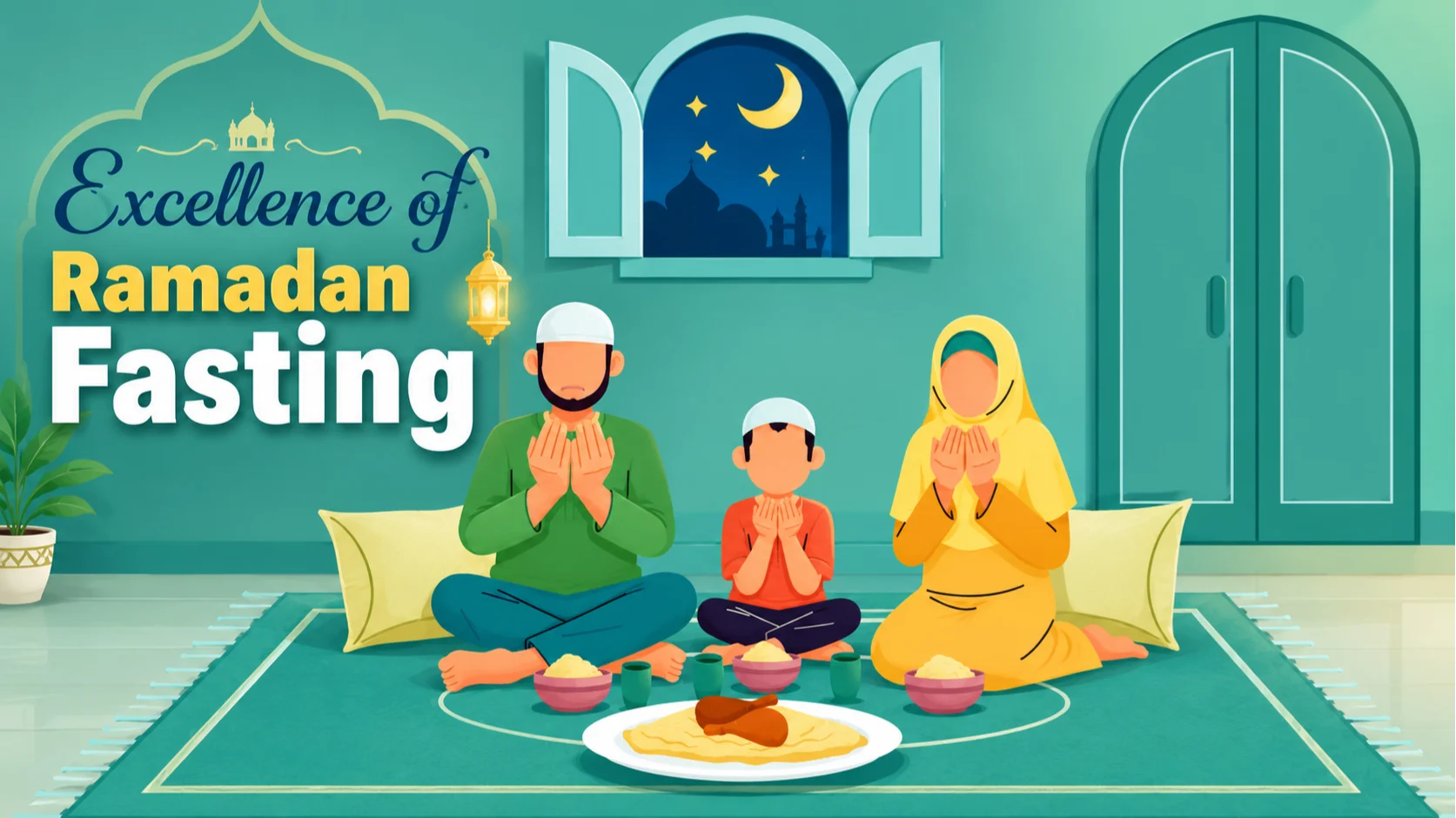
Fasting, or sawm, is one of the most important obligations in Islam. Every adult Muslim, provided that he or she is in full possession of his or her faculties, is obligated to fast in the holy month of Ramadan. It is one of the five pillars of Islam and is prescribed for Muslims as an act of worship and a form of spiritual purification through charity and good deeds. Allah Almighty says, “Believers, fasting has been made mandatory for you as it was made mandatory for the people before you, so that you may have fear of God.”
Introduction
After prayer, the second obligatory duty which every Muslim is required to perform is that of fasting during the month of Ramadan – the 9th month of the Islamic calendar. In Islam, fasting is primarily an institution for spiritual discipline and self-control. It is, in fact, an exercise in religious devotion in the form of cheerful and willing renunciation, for a definite period, of all the appetites.
During Ramadan, a Muslim neither eats a grain of food nor drinks a drop of water from dawn to dusk, even how delicious the food is or how hungry or thirsty he may feel. But it is important to mention that fasting is not only about avoiding food or drink; rather, it is a practice of self-discipline and self-control. In the deeper meanings, fasting becomes a period of meditation, self-restraint, repentance and spiritual recuperation.
Definition & Meaning
Linguistically, fasting is to abstain from something. The word sawm which has been used in the Holy Quran and the Hadith for fasting means, "to abstain"; thus, a horse that abstains from moving about or from eating the fodder is said to be sa'im. In the technical language, sawm signifies fasting or abstaining from food and drink and sexual intercourse from the dim beginning of dawn till sunset. In Islamic terminology, fasting is the act of abstaining from a set of fast-nullifiers with the intention of attaining nearness, submission and obedience to Allah Almighty.
Some Quranic Verses
· “Oh you who believe! Fasting is prescribed to you as it was prescribed to those before you, that you many learn piety and righteousness.” (Quran; 2:183)
· “God has promised forgiveness and great rewards to the Muslim men and the Muslim women, the believing men and the believing women, the obedient men and the obedient women, the truthful men and the truthful women, the forbearing men and the forbearing women, the humble men and the humble women, the almsgiving men and the alms-giving women, the fasting men and the fasting women, the chaste men and the chaste women, and the men and women who remember God very often.” (Quran; 33:35)
Ahadith
· Narrated Abu Huraira (RA): The Messenger of Allah (PBUH) said:"... whoever fasts during Ramadan out of sincere faith and hoping to attain Allah's rewards, then all his past sins will be forgiven." (Imam Bukhari).
· Abu Said al-Khudri reported that the Messenger of Allah (PBUH), said: "No servant fasts on a day in the path of Allah except that Allah removes the hellfire seventy years further away from his face."
· Abu Umamah reported: "I came to the Messenger of Allah (PBUH) and said: 'Order me to do a deed that will allow me to enter Paradise.' He said: 'Stick to fasting, as there is no equivalent to it.' Then I came to him again and he said: 'Stick to fasting."' [Imam Ahmad, Imam Nasa'i, and Imam Hakim].
· "Fasting is a shield with which a servant protects himself from the Fire." [Imam Ahmad, Saheeh]
· On the Day of Judgement, "Fasting will say: O My Lord I prevented him from food and desires so accept my intercession for him." [Imam Ahmad, Imam Haakim and Abu Nu'aim, Hasan]
Rules of Fasting
A fasting person must refrain from eating or drinking from dawn until sunset. In addition to abstaining from food and drink, smoking of any kind and sexual relations are prohibited during fasting hours. Fasting aims to purify the soul, so anger, gossip and any inappropriate behaviour should be avoided. Unintentional eating or drinking, such as forgetting and then stopping upon remembering, does not break the fast.
The Message of Fasting
Fasting is a special training where one is being prepared to lead a principled life—not merely during the month of fasting, but, in fact, for the whole year round. Sighting the Ramadan moon is meant to psychologically prepare believers to be ready for the month of fasting. Seeing the moon evokes the feeling that the time has come to revolutionize their lives. The month of fasting is a period of “total activity”—a time of special religious observances. In other months, they could eat and drink anytime, hunger and thirst being their guide, but now 'principle' becomes their guide.
Benefits
Fasting has many benefits for the believers. Like all the religious practices in Islam, fasting will make the believer stronger as a believer, closer to the Creator (Allah), more blessed and happier to be with Him. We have been informed of the benefits and virtues of fasting expressed in the Quran and in the Sunnah of the Prophet (PBUH). These benefits and virtues motivate everyone to perfect his/her fasting. The Prophet (PBUH) has pointed out to us the real spirit of fasting and has explained that to go hungry and thirsty while ignoring the spirit of fasting carries no value in the sight of Allah the Most High.
The virtues of fasting in general, and of Ramadan in particular, are explained as follows:
1. Develops Taqwa
Fasting is a spiritual worship that teaches good morals like honesty, faithfulness and loyalty, and induces piety and fear of Allah. The ultimate virtue of fasting is to develop in the heart of a person the fear of Allah and keep all duties to Him. This could be done by performing good deeds that Allah has ordained and abstaining from all sorts of evil that He has forbidden.
Indeed the person who has attained Taqwa has attained excellence in the worship of Allah. In many verses of the Quran, Allah says that the reward of the people of Taqwa is Paradise.
2. Endows Nearness to Allah
Belief in Allah, in His Lordship and His worship instils in a Muslim's heart Allah's love. Performing Allah's instructions and avoiding His proscriptions are the means of achieving ultimate happiness in this life and the Hereafter for the individual as well as society. Allah Almighty says, “Whoever works righteousness, whether male or female, while he/she is a true believer (of Islam), verily to him We will give a good life (in this world with respect, contentment and lawful provision), and We shall pay them certainly a reward in proportion to the best of what they used to do (i.e. Paradise in the Hereafter)”. (An-Nahl, Verse: 96)
3. Helps Attain Allah's Forgiveness
Actually, none of us is perfect. We all have some weaknesses and shortcomings. We find ourselves committing sins out of ignorance or out of submission to our desires, thus driving ourselves away from the straight path. In Islam, there is no recourse for a sinner except to ask Allah for forgiveness from the heart. In fact, seeking forgiveness of Allah and turning to Him in repentance is a part of faith. This is indicated in the words of Allah: “And turn in repentance and in obedience with true Faith to your Lord and submit to Him, before the torment comes upon you, then you will not be helped.” (Az-Zumar: Verse 54)
It is reported from Abu Hurairah (RA) that Allah's Messenger (PBUH) said, ““He who fasts Ramadan with faith and seeking its reward from Allah will have his past sins forgiven.” (Bukhari and Muslim)
4. A Culture of Self-control
Fasting is a religious practice common to all faiths and is prescribed in Islam to cultivate self-control and guard against evil. Human beings constantly choose between desire and reason, and fasting trains individuals to restrain desire and submit to reason. While it formally involves abstaining from food and drink, the true spirit of fasting lies in avoiding negative thoughts, language and behavior. The Prophet Muhammad (PBUH) emphasized this by advising those who fast to remain calm and avoid abuse.
Self-control is essential for both personal success and social harmony, as life often requires restraint more than action. It enables mutual adjustment in society, prevents conflict and promotes peace. Practised sincerely, fasting strengthens character, encourages thoughtful behavior and develops wisdom. Thus, fasting is worship for Allah that simultaneously benefits individuals and society.
5. Means for Purification
Fasting is described in Sunan Ibn Majah as a means of purification, cleansing the soul just as bathing cleanses the body. Ramadan fasting, therefore, nurtures a culture of abstinence that purifies thought, speech and overall wellbeing. Human existence consists of both body and soul: while the body enables worldly activity, the soul elevates a person toward higher realities. Both require nourishment and purity—the body through physical means and the soul through spiritual discipline. Fasting serves this purpose by detaching individuals from material concerns and directing them toward God. Through conscious restraint, fasting refines spiritual awareness, purifies inner and outer being, and strengthens moral and religious character, making Ramadan an exercise in self-discipline and self-purification.
6. A State of Transformation
Fasting is not merely a ritual but a disciplined practice aimed at cultivating inner spirit and transforming an individual's thinking and temperament. Alongside other divine commands, it reshapes moral and mental efforts toward good character and wellbeing, gradually spiritualizing the entire personality. True fasting nurtures sincerity, tolerance, mindfulness, wisdom and reflection, fostering inner balance and satisfaction. Such a person remains steadfast and is not swayed by provocation or negativity. In this sense, fasting has deep social and moral relevance, helping transform ordinary individuals into peaceful and harmonious members of society. Beyond enriching humanity collectively, the true essence of fasting develops modest, virtuous individuals, replacing arrogance and immorality with ethical and compassionate living.
7. Character-building
Fasting builds character by fostering self-discipline, patience, empathy and responsibility, training individuals to control desires, understand the struggles of the poor and prioritize spiritual duties over physical comforts, thereby strengthening moral fortitude, reducing negative habits and promoting virtues like honesty, forgiveness and generosity. It's a holistic practice that goes beyond abstaining from food to purifying the heart, mind and actions for a more righteous life, extending beyond ritual to daily conduct.
8. Social Benefits
Islamic fasting yields profound social benefits by cultivating self-control, patience and empathy within individuals. By restraining desires and negative impulses, fasting reduces aggression, intolerance and conflict, thereby promoting social harmony. It nurtures compassion for the poor and hungry, strengthening feelings of solidarity and social responsibility. Fasting also encourages ethical speech and behavior, as believers are urged to avoid anger, abuse and harm to others. When practised collectively, fasting creates a shared moral atmosphere that reinforces discipline, mutual respect and cooperation. In this way, Islamic fasting contributes to peaceful coexistence, moral accountability and the development of a balanced, considerate and socially responsible community.
9. Encourages Acts of Charity
Fasting is a powerful reminder of the struggles faced by those who live in poverty and endure hunger daily. This awareness fuels a deep sense of empathy and compassion, inspiring Muslims to engage in acts of charity. Whether it's through Zakat (obligatory alms-giving) or Sadaqah (voluntary charity), giving back becomes a central theme during Ramadan.
Community iftar programs, where meals are shared with those in need, further demonstrate the spirit of generosity. These acts of kindness not only support the less fortunate but also reinforce social bonds and strengthen the collective sense of responsibility toward creating a more equitable society.
10. Boosts Gratitude and Mindfulness
By abstaining from food, drink and other comforts, fasting allows Muslims to recognize and appreciate the blessings often taken for granted. This practice fosters a deep gratitude, enriching one's spiritual and emotional well-being. Fasting also encourages mindfulness, as individuals become more conscious of their thoughts, actions and the needs of others. This heightened awareness carries over into daily life, promoting a more intentional and compassionate approach to living.
The writer is a professor of Islamic Studies.