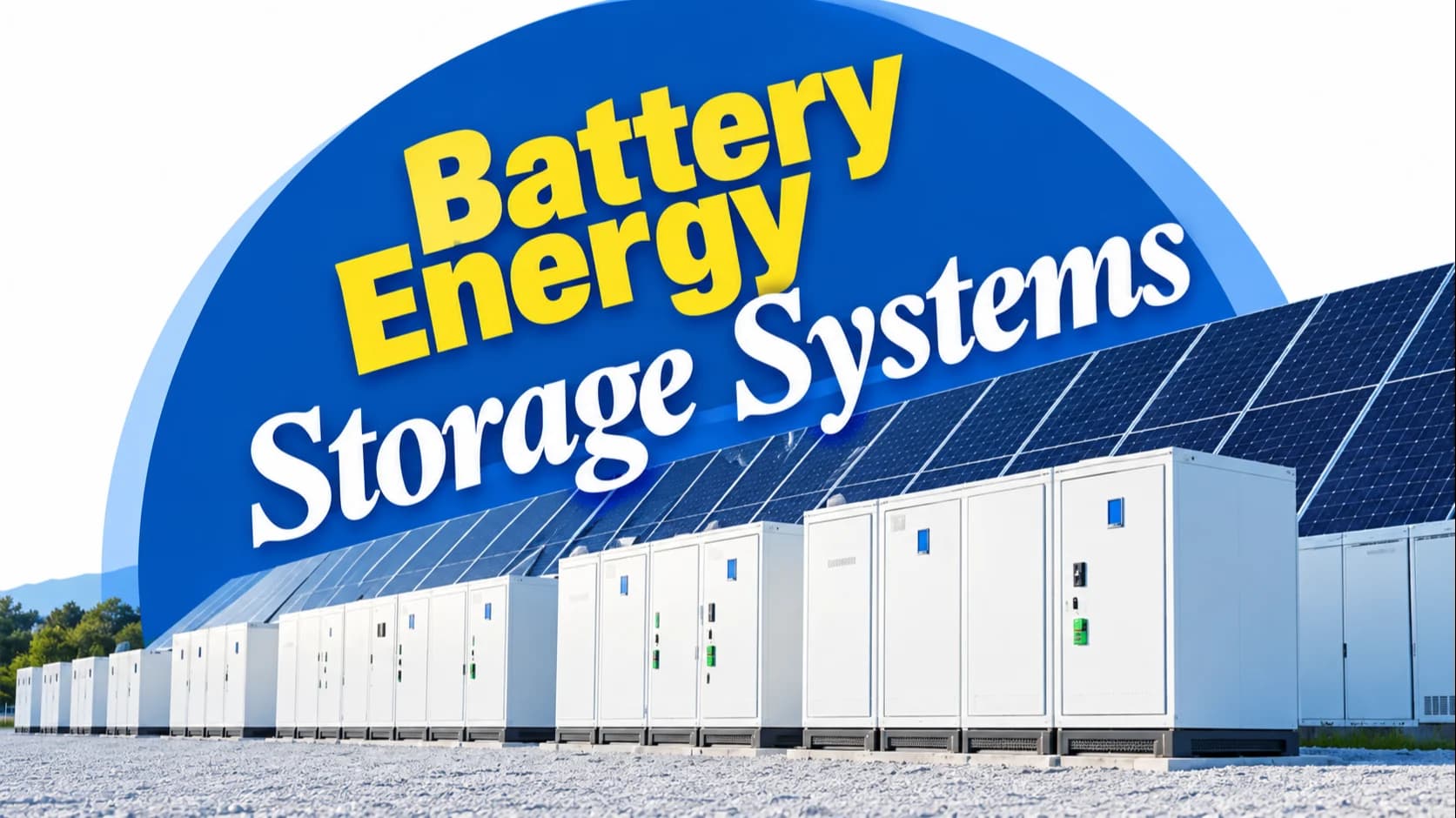
Battery Energy Storage Systems
The world is fast moving towards energy storage solutions. First the solar panel technology improved amid a sharp fall in prices; now it's lithium-ion batteries' turn, whose prices are nosediving. Battery storage solutions are gaining traction. It's a global phenomenon; however, adaptation in Pakistan is amongst the fastest.
The Government of Pakistan is working on large, utility-scale Battery Energy Storage Systems (BESS) to ensure stability of the national grid, which is currently facing challenges such as frequency fluctuations caused by the induction of intermittent renewable energy sources faster than planned targets. “The government ... is pursuing the development of large-scale battery energy storage systems through private sector investments to address the intermittency of variable renewable energy, optimize grid demand management and enhance overall system stability,” Power Minister Sardar Awais Leghari told the National Assembly in a written statement.
What are Battery Energy Storage Systems?
Battery Energy Storage Systems (BESS) represent a critical technology in the modern energy landscape, pivotal for enhancing the efficiency and reliability of the power grid and facilitating the integration of renewable energy sources.
Energy storage technology using batteries has already demonstrated its commercial viability and estimates show that the BESS market is expected to reach between $120 and 150 billion by 2030 as per McKinsey's article on Battery Energy Systems.
BESS are advanced systems that use rechargeable batteries to store energy generated from different sources, generally renewable sources like sun and wind, and release it to the grid when needed. BESS are intelligent systems that use algorithms and software to coordinate with the electricity grid and decide whether to store or release energy.
Commonly used batteries in BESS:
- Lithium-ion batteries, due to their high energy density, long lifespan and declining costs.
Components
A typical BESS includes:
- Battery cells: The basic units of the system where energy is stored chemically.
- Battery Management System (BMS): A system that manages the charging and discharging of batteries, ensuring the safety and efficiency of the storage system.
- Power Conversion System (PCS): Converts electrical energy from AC to DC and vice versa, facilitating the integration of the storage system with the grid.
- Control System: Manages the operation of the BESS, optimizing performance and interaction with the power grid.
Types
There are several types of BESS technologies available, each with its unique advantages:
- Lithium-Ion Batteries: They have excellent energy density, are portable and are commonly employed in portable solar panels and household applications.
- Lead-Acid Batteries: Affordable and short-term reliable.
- Flow Batteries: Long-term and can be used in bigger installations, such as industrial uses of solar power.
- Flywheels: Deliver energy as kinetic energy, which is best suited to short-term energy storage.
Choosing the right type depends on your application, budget and energy needs.
Applications
- Energy Arbitrage: Buying energy when prices are low, storing it, and then selling it when prices are high.
- Renewable Energy Integration: Storing excess energy generated from renewable sources for use when generation is low or demand is high.
- Grid Stability and Reliability: Providing ancillary services such as frequency regulation, voltage control and spinning reserves to support grid operation.
- Peak Shaving: Reducing peak demand charges for industrial and commercial energy users by supplying stored energy during peak demand periods.
- Emergency Backup: Offering power supply continuity during outages or disasters.
Advantages
- Flexibility: Can be deployed at various points in the energy system, from residential applications to utility-scale projects.
- Rapid Response: Capable of responding to changes in demand or supply within milliseconds, providing a critical resource for balancing grid operations.
- Emissions Reduction: Facilitates the increased use of renewable energy, contributing to a reduction in greenhouse gas emissions.
- Energy Independence: Enhances energy security by reducing reliance on fossil fuels and imported energy.
Challenges
- Cost: While the cost of battery storage has been declining, the initial investment remains significant, especially for large-scale applications.
- Battery Lifespan and Degradation: The efficiency and capacity of batteries degrade over time, impacting the performance and economics of BESS.
- Recycling and Sustainability: Developing efficient recycling processes for battery materials is crucial to address environmental concerns.
Ongoing research into alternative battery technologies, such as solid-state batteries, aims to improve performance, safety and cost-effectiveness.
Why Pakistan needs BESS?
- Electricity prices are one of the highest in Pakistan. Hence, alternate solution adaptation is rampant.
- It will enable a more decentralized and consumer-centric system.
- Utilizing stored energy from batteries during peak load hours could significantly reduce consumers' energy bills.
- They can provide electricity to communities living far off the national grid.
The writer is a student of Environmental Science.
Shahzad Malik