Print subscription includes a free wall-size coloured map.Special offer: Subscribe Now (Print) and Get Free Wall Size Coloured Map!Subscribe Now
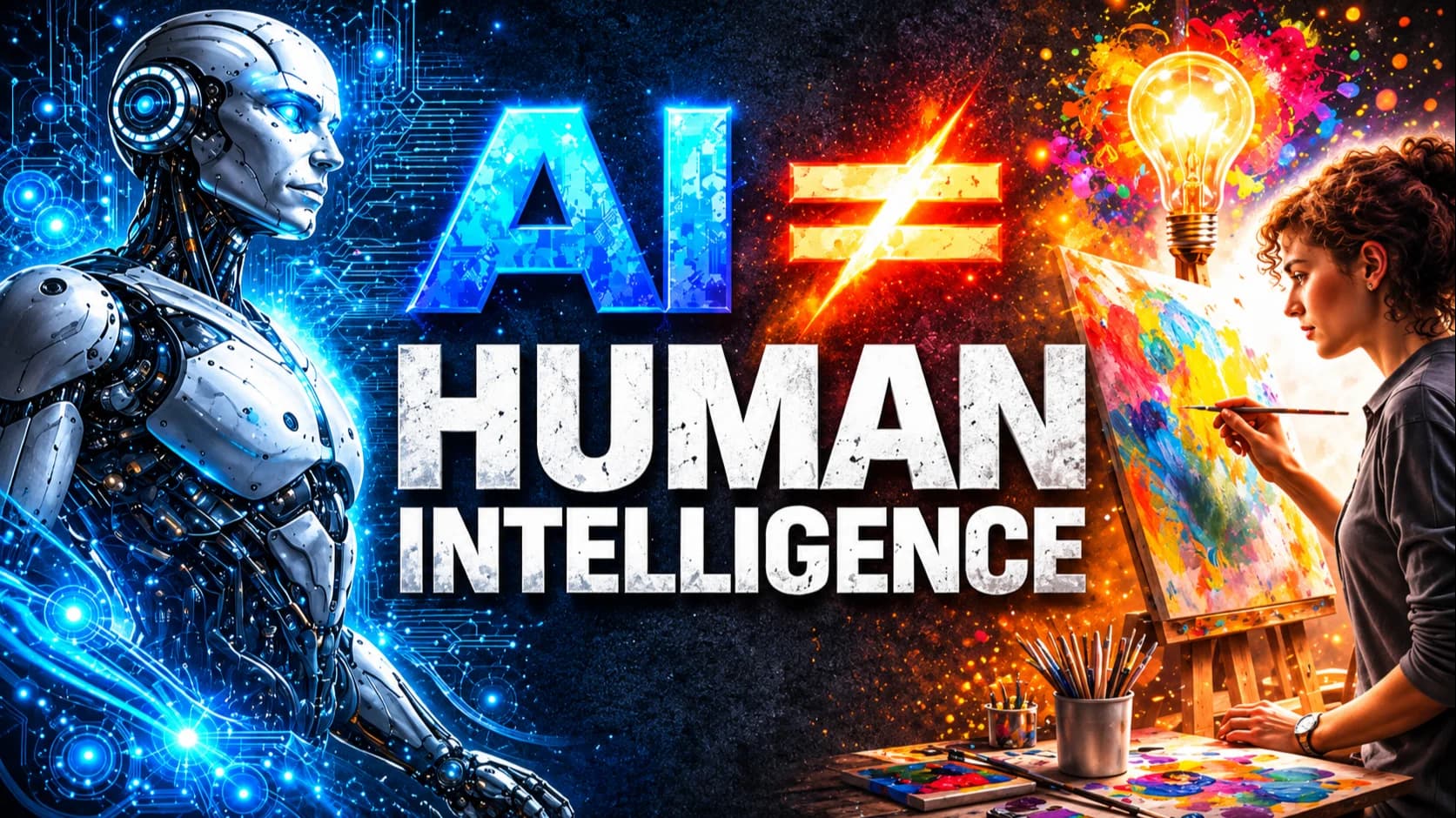
In the modern world, artificial intelligence (AI) is evolving and deeply impacting every aspect of life. We can observe its presence everywhere, from social media to chatbots to autonomous vehicles. It is influencing the ways people think, communicate, learn and even make decisions. This integration of AI in daily life has given birth to a proposition that it can replace human intelligence. Although AI systems are extraordinary in helping solve computational and data-driven problems, they do not equal human intelligence, which is deeply embedded in consciousness, based on emotions, experience, ethics, social relationships and meaning-making. On the other hand, AI systems are based on generating statistical outcomes through data. This raises an interesting question: how can an entity created by humans go beyond human abilities? To understand this, there is a need to analyze intelligence.
In psychological epistemology, the concept of intelligence has remained a critical inquiry.
Alfred Binet (1905) described intelligence as the ability to think, judge and understand.
David Wechsler (1958) argued that intelligence is the capacity to act purposefully and rationally in accordance with one's environment.
Hence, intelligence is not merely about producing correct data output; it's about judging and understanding a particular phenomenon or a problem. Intelligence is an ability equally found in humans and animals but with varied degrees.
Developing on the concept of intelligence, Jean Piaget (1952) stated that human intelligence is a particular instance of biological adaptation. It enables individuals to adjust to their environment through complex mental structures.
In a similar vein, Linda S. Gottfredson (1997) defined human intelligence as a very general mental capability that involves the ability to reason, plan, solve problems, think abstractly, comprehend complex ideas, learn quickly and learn from experience.
Human intelligence is, thus, not a uniform concept; it is varied, plural and vast. Table 1 provides a glimpse of it.
John McCarthy defined AI as the science and engineering of making intelligent machines.
Stuart Russell & Peter Norvig define AI as the study of agents that receive percepts from the environment and perform actions.
According to the Oxford Dictionary, AI is the theory and development of computer systems able to perform tasks normally requiring human intelligence.
Put simply, AI refers to computer systems designed to perform certain tasks that usually require human intelligence, e.g. analyzing data, recognizing data patterns and predicting outcomes. Modern AI systems are heavily reliant on machine learning and deep learning which involve training algorithms on datasets for analysis and prediction. Table 2 differentiates between different types of AI.
Consciousness is the fundamental difference between AI and human intelligence. Human beings are conscious beings who are aware of themselves through their thoughts, emotions and real-life experiences. AI cannot experience emotions, as they can only generate languages based on mathematical inputs and outcomes. For instance, mental health chatbots are being widely used in medical practice where patients discuss their concerns. While chatbots can provide solutions, they cannot empathize because of a lack of consciousness. It can only mimic human-like responses, and in many cases, chatbots have processed generic and inappropriate responses. In the wake of this, recent Italian research by Walter Quattrociocchi and Valerio Capraro titled “Epistemological Fault Lines between Human and Artificial Intelligence,” compares how humans and AI process information. They concluded that while AI often mimics human results, its internal methods are fundamentally different, relying on word-pattern prediction rather than true understanding.
Human intelligence is formed – and reformed – through shared live experiences. Human beings learn from socio-cultural interactions and emotional encounters, as posited by Vygotsky in his sociocultural theory of cognition. Experiential learning helps generate meanings, thereby producing capacity for critical inquiry, problem-solving and understanding. On the other hand, AI learns only from data; it does not interact with society and its cultural milieu. Its reliance on data is based on critical limitations because data can be biased and incomplete. According to research produced in 2023 by Hung and Yen, many advanced countries have installed predictive policing AI systems to estimate crime hotspots. The systems were fed with historical crime data but they generated biased and racial outcomes, including in the United States, where the system targeted marginalized and Black communities. This happened because AI systems cannot understand contexts of crime that are socioeconomic; rather, they can only produce predictions.
Human intelligence is flexible and context-sensitive, which generates the capacity to learn and re-learn the outcomes. This flexibility allows the transfer of knowledge across different domains and adaptability according to environment. AI largely remains narrow work in a singular domain without the capacity to be adaptable. For example, Dubova (2022) described that self-driving cars use AI tools to navigate roads with the use of sensors and pattern recognition, but they work in familiar environments for which they are programmed. These cars cannot work smoothly in environments which are unfamiliar whereas human drivers can instantly adapt to unpredictable situations.
Human intelligence can perform multitasking based on sensitivity and context. For example, women who manage households often take care of their children, cooking and doing other household chores simultaneously. Kaplan and Haenlein (2023) argue that AI is designed to do singular tasks which are narrow and domain-based at a time. For example, large language models like ChatGPT work on prompt engineering; they give results on a single query sequentially.
AI is a powerful technological revolution and it is also evolving rapidly, but it does not equal human intelligence, which is vast and varied, based on consciousness, emotions, social awareness and ethical reasoning. AI completely works on a logical and computational basis. Human intelligence is shaped by experience, sensitivities and environment, but AI works on datasets. AI helps humans to resolve complex computational problems; with this ability, it can be termed as a partner or intelligent collaborator, but it does not equal human intelligence.
The writer is an MPhil scholar, Data Science enthusiast & lifestyle medicine activist.
She can be reached at: Iqrarz2009@live.com
Topics

The writer is an MPhil scholar, Data Science enthusiast & lifestyle medicine activist.