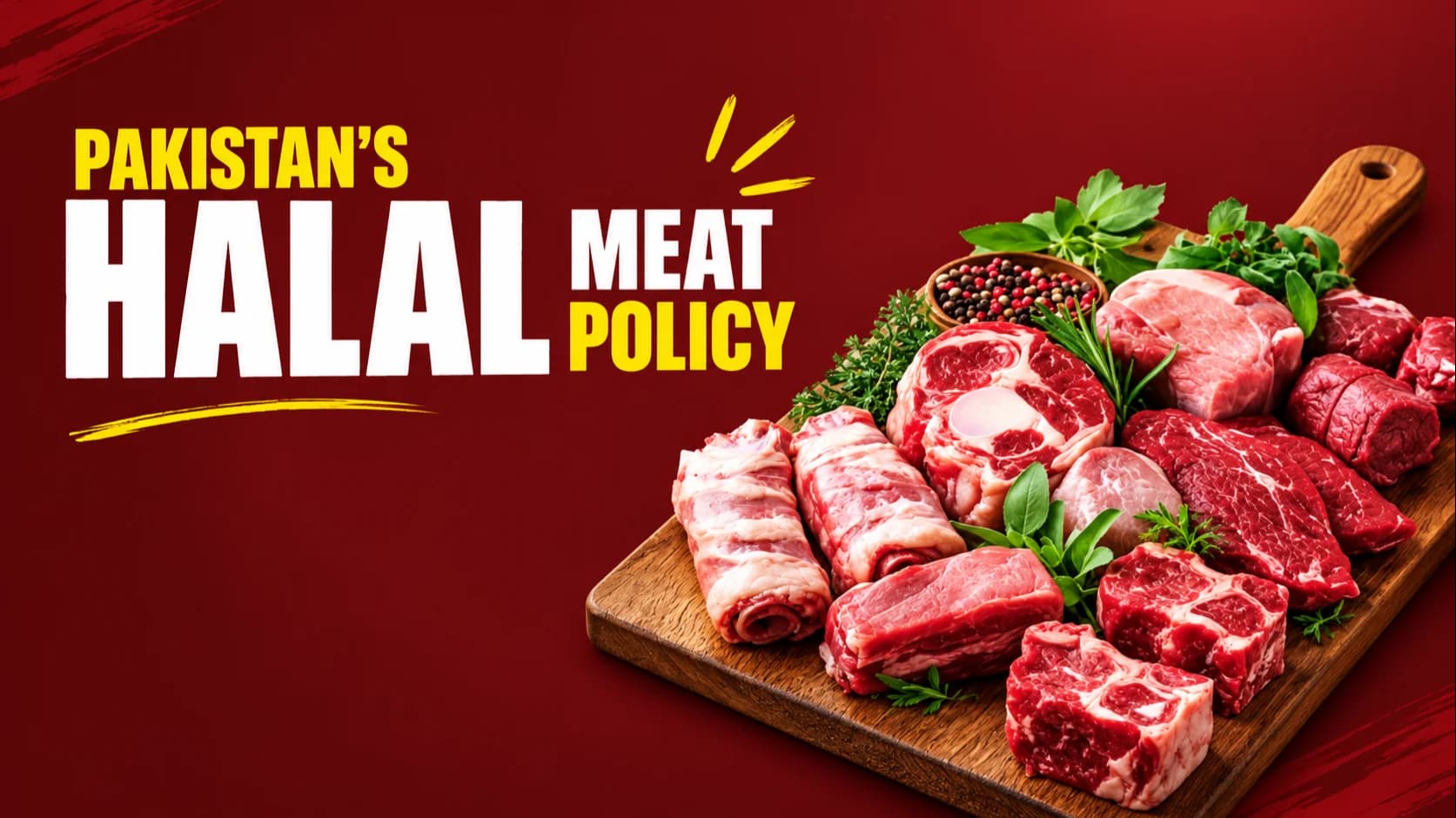
The halal sector is a key pillar of sustainable economic growth, and presents a promising opportunity to enhance global trade and investment. The global Halal market has rapidly transformed into a multi-trillion-dollar economy, encompassing not just food, but also pharmaceuticals, cosmetics, fashion and finance. This expansion offers tremendous opportunities for countries like Pakistan to position themselves as key players on the global scene. Realizing the growth of this evolving industry, and the benefits that Pakistan can reap from being a major player in this sector, Prime Minister Shehbaz Sharif recently approved Pakistan's halal meat export policy that targets expansion in Muslim as well as global markets.
The Halal Meat Sector
The global halal market for the livestock products, including milk, meat and poultry products, is around $200 billion. There is a significant export potential for halal meat and value-added products, targeting the Middle East, Asia and Africa.
Pakistan's total halal meat production is six million metric tons, and sufficient quantity is available for export after meeting domestic demand.
A 2024 report by the Pakistan Bureau of Statistics (PBS) said the country exported meat worth $512 million last year, which included beef, mutton and poultry.
According to the PBS, the United Arab Emirates (UAE) remained Pakistan's top meat export market in 2024 with exports to the Gulf nation reaching $201 million.
Meanwhile, meat exports to Saudi Arabia recorded a growth of 65.1 percent last year at $141 million.
Other major destinations for meat exports include Kuwait, Qatar, Uzbekistan, Vietnam and Kazakhstan, while China and Kyrgyzstan are among new markets where Pakistan exports meat.
A Recent Development
The government has set a target of exporting halal meat worth $520 million to Malaysia over the next five years.
The government has declared halal meat a priority sector to boost exports and has prepared a plan to export 130,000 metric tons of meat to Malaysia during this period, generating $520 million in foreign exchange.
Under the plan, 552,000 animals will be required for meat exports, while investment of $140 million will be needed in the livestock sector over five years. Of this amount, $80 million will come from the private sector and $60 million from the government.
Analysis
Pakistan is once again looking to exports for relief, and this time the bet is on halal meat. The new policy, a three-year roadmap, has been formulated keeping in view the growing demand in Muslim markets. Pakistan produces roughly six million tons of meat each year, an overwhelming bulk of which is eaten at home. Even after a record performance, meat exports in FY2023-24 barely crossed the $500 million mark. Set against a global halal food market running into trillions of dollars, Pakistan's presence is barely visible. Countries such as Brazil, Australia and New Zealand did not achieve their share of the pie through slogans or niche branding. They developed systems and earned credibility to ensure their monopoly.
Our problem, as always, lies in execution. The real question is whether a push into halal meat exports can genuinely shift Pakistan's external accounts or whether it risks becoming another well-packaged idea that fades once the headlines move on.
The writer is a member of staff.