Print subscription includes a free wall-size coloured map.Special offer: Subscribe Now (Print) and Get Free Wall Size Coloured Map!Subscribe Now
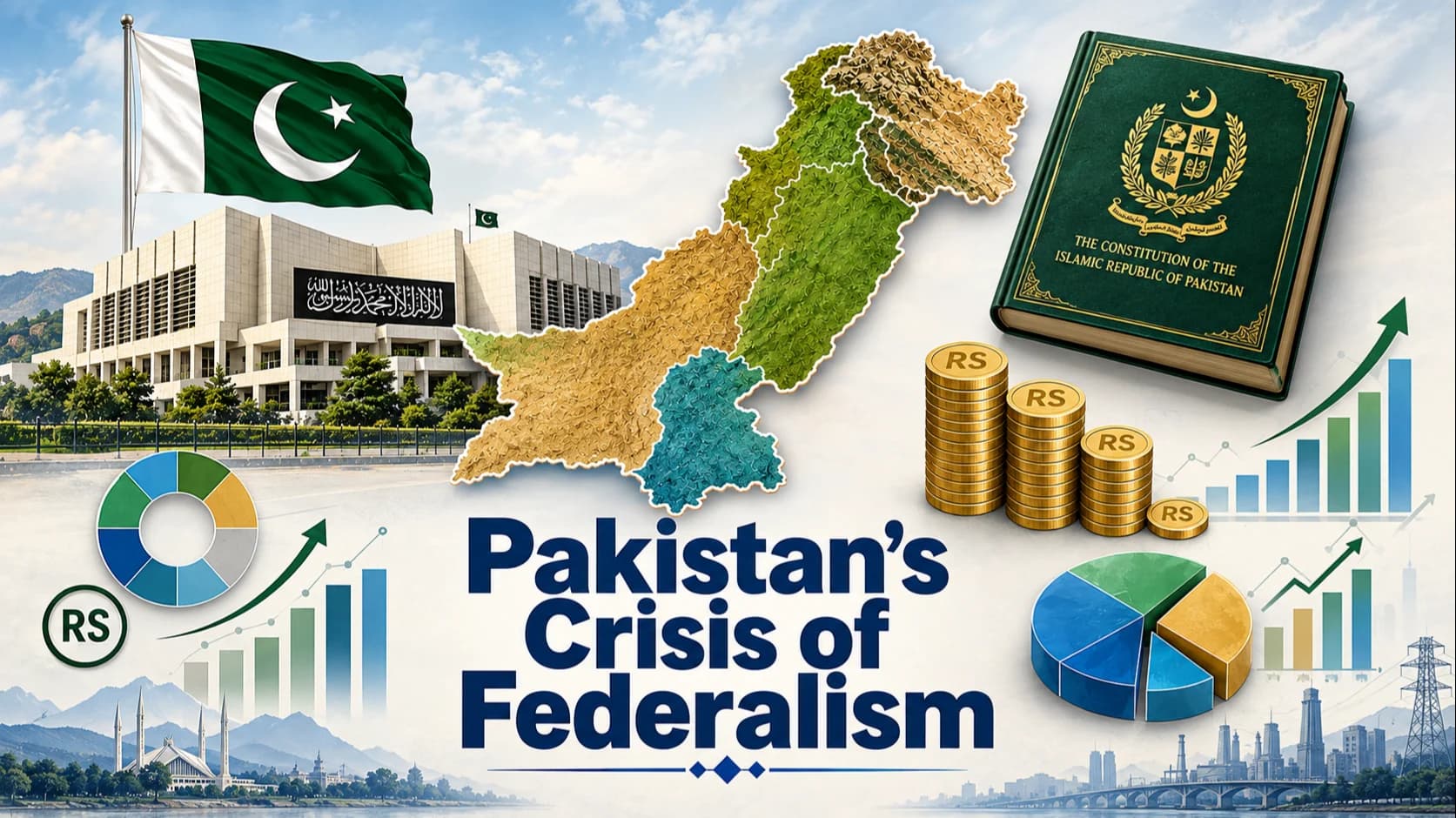
Summary. When Pakistan came into existence in 1947, it had a vast geography and provinces having distinct languages, cultures, political priorities and economic conditions. At that time, the only viable constitutional arrangement that could accommodate ethnic diversities and promote national cohesion was federalism. However, for the last 79 years, federalism has been a running negotiation between the center and provinces, civilian and military rule and centrifugal and centripetal forces. Despite the inevitability of decentralized governance, successive regimes in Pakistan could not come up with a power-sharing mechanism that could address structural problems that undermine national cohesion. Federalism, be it fiscal, political or administrative, could not take deeper roots in Pakistan's polity, impeding national growth and development and even undermining national integration, evident in the form of the secession of East Pakistan and growing grievances among smaller provinces against Punjab. Understanding how Pakistan has arrived at this stage and why a centralized form of government couldn't perform despite favorable circumstances is critical to answering why our state struggles to school its children, tax its citizens equitably and balance its books.
Topics

The writer is a graduate of the University of Agriculture, Faisalabad. He writes on national and international affairs.