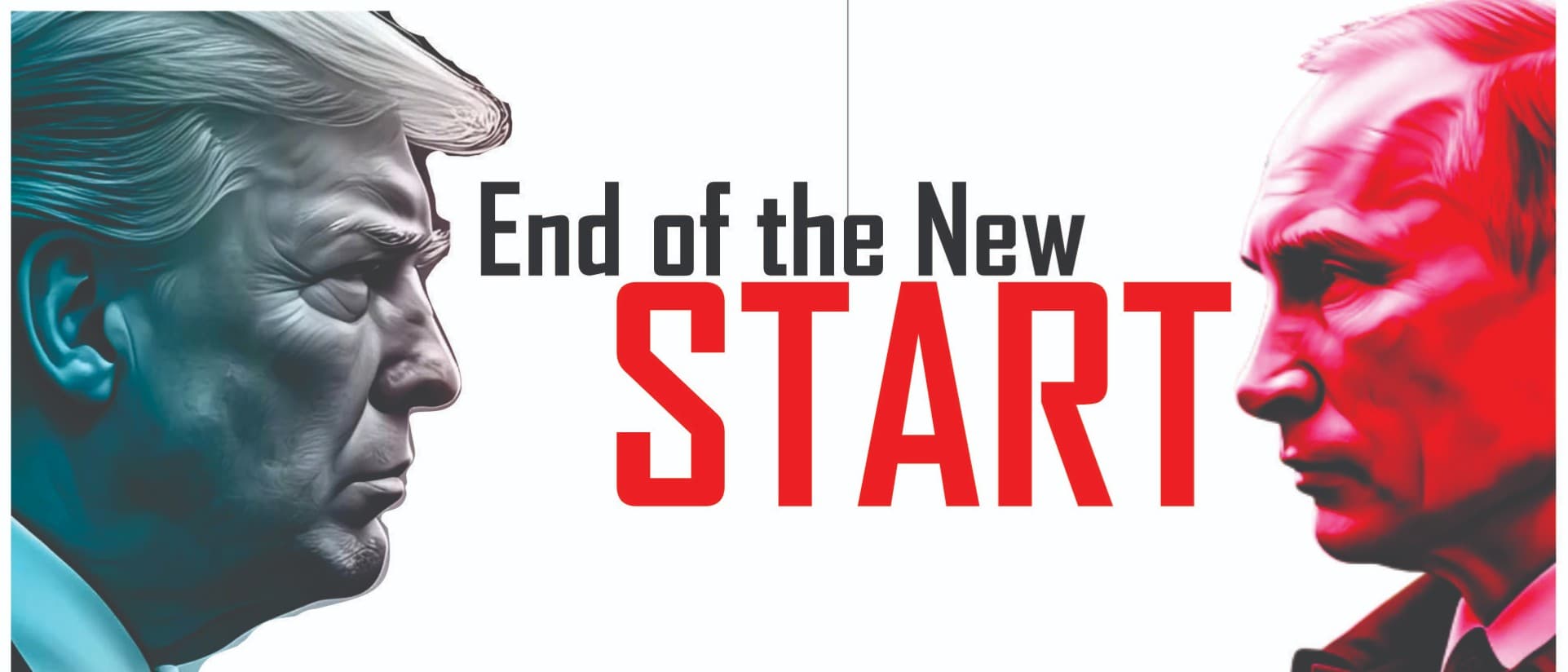
The Strategic Arms Reduction Treaty, also known as 'New START,' has expired, without a successor. The expiry of this last nuclear weapons control treaty between the United States and Russia, which was signed in 2010, marks a grave moment for international peace and security, as it effectively puts an end to the arms control cooperation between Washington and Moscow that helped bring an end to the Cold War.
On Feb. 5, 2026, the world entered a critical phase in more than half a century, as the treaty that limited the United States and Russia to 1,550 deployed strategic nuclear warheads on 700 deployed nuclear delivery systems (airplanes, intercontinental ballistic missiles and submarine-launched missiles) and to 800 deployed and non-deployed nuclear launchers of those missiles and airplanes that can launch nuclear weapons, expired. With the expiry of the New Strategic Arms Reduction Treaty (New START), we face a world without any binding limits on the strategic nuclear arsenals of Russia and the United States – the two states that possess the overwhelming majority of the global stockpile of nuclear weapons.
The New START, or Prague Treaty, was signed by then-US President Barack Obama and his Russian counterpart, Dmitry Medvedev, in Prague on April 8, 2010, and entered into force the following year.
Premium Content
Continue reading with unlimited access to exclusive insights, analysis, and expert perspectives.
Subscribe to unlock this article and more features