Print subscription includes a free wall-size coloured map.Special offer: Subscribe Now (Print) and Get Free Wall Size Coloured Map!Subscribe Now
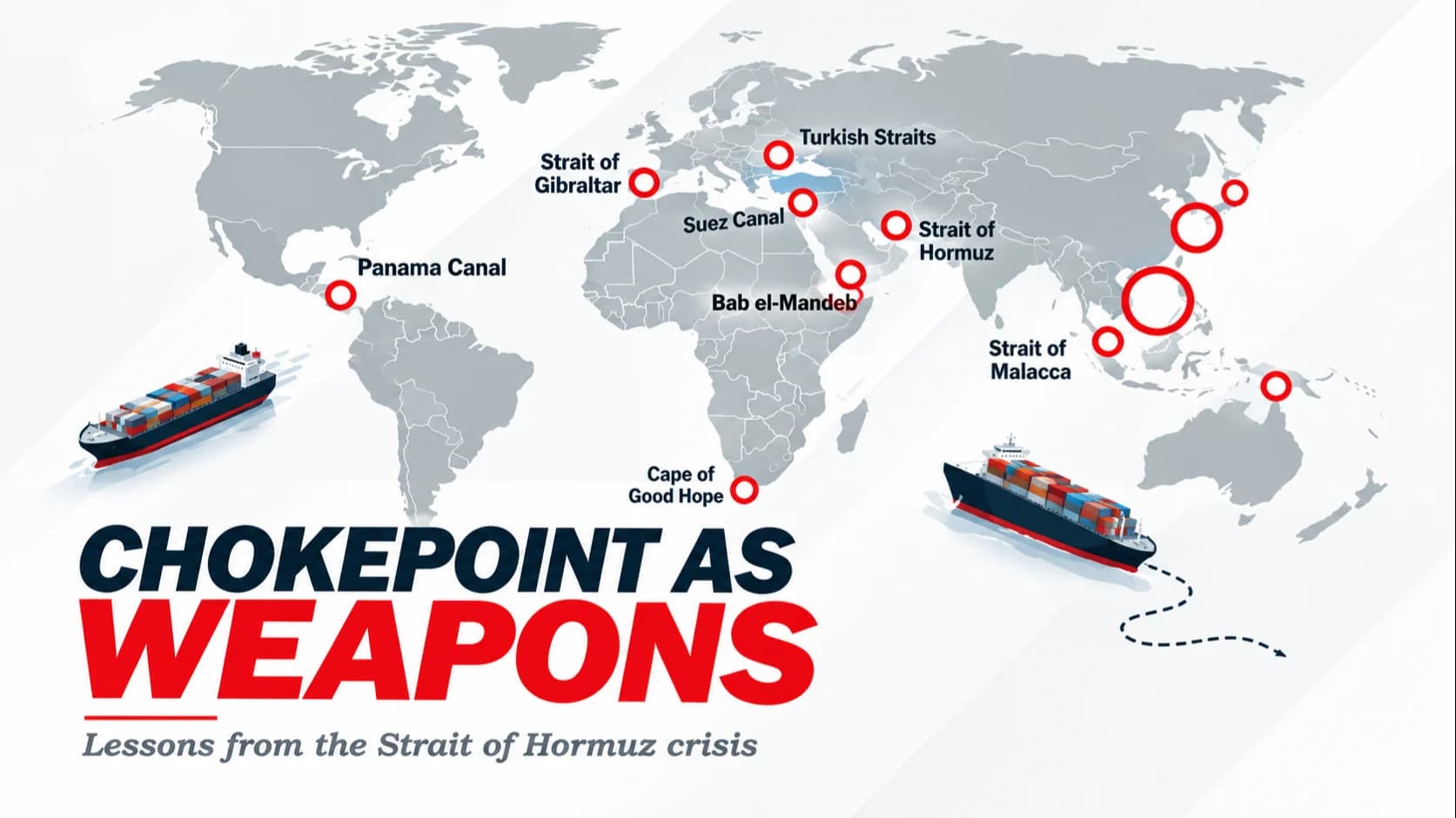
Summary. After nearly two months of coordinated US–Israeli military operations against Iran, a central strategic lesson has emerged: modern warfare is increasingly defined by the ability to disrupt connectivity rather than solely destroy military assets. Iran's asymmetric response by closing the Strait of Hormuz demonstrates that critical infrastructure and the vulnerabilities embedded in global interdependence have become a primary instrument of coercion. In this context, infrastructure disruption operates as a force multiplier: even limited attacks can trigger disproportionate systemic effects, translating tactical actions into strategic leverage through market volatility, supply uncertainty and cascading economic consequences. Control over chokepoints allows actors to impose diffuse but far-reaching costs, effectively linking localized conflict dynamics to global economic stability. In this model, deterrence is no longer anchored solely in military retaliation, but in the threat of systemic disruption.
Topics

The writer is an Assistant Editor of JWT.