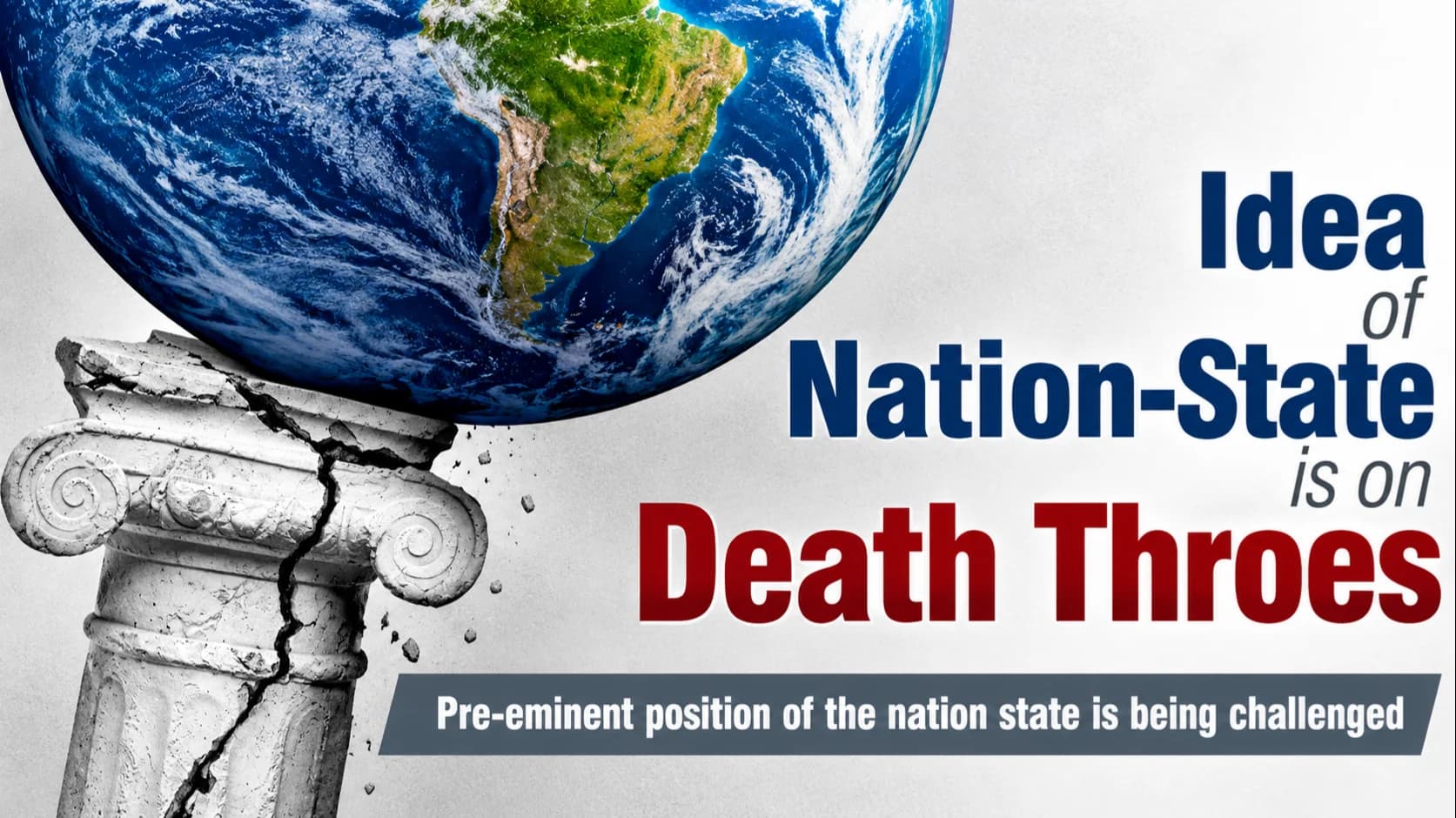
Rumors of the death of the nation-state may be exaggerated, but they have become rife in recent years, and perhaps rightly so, as the era that began in 1648 with the Treaty of Westphalia is ending and seems no longer viable. Politicians and thinkers and nations can no longer think of themselves in the context of nationalism that gave rise to the modern nation-state of the industrial era. They are now being forced to think in a new international context since globalization means that nations can no longer think of themselves in isolation from the rest of the world. The growing interdependencies between nations driven by changes in the structure of the global economy, international relations and technological advancement are forcing people to question the nature of the nation state and social organization.
The modern world rests on an idea of sovereign nation-states that was forged nearly four centuries ago. Since the Peace of Westphalia in 1648, this model has defined international relations. As per this mode, a nation-state is a political entity where a single, self-governing state (defined territory with government) aligns closely with a nation (a large group sharing common culture, language, history). Essentially, it's a country where most people feel they belong to the same national identity, creating a shared sense of belonging, although truly homogenous nation-states are rare today, with most countries encompassing multiple national groups.
The ideas behind the nation-state germinated in the 19th century and reached their peak in the 1870s following the unification of Germany under Bismarck and Italy under Garibaldi. It took two World Wars, the fragmentation of three empires and the end of colonialism to complete the process. There were 50 states that signed the UN Charter in 1945. Fifteen years later, the number had doubled, and it is now 193.
Premium Content
Continue reading with unlimited access to exclusive insights, analysis, and expert perspectives.
Subscribe to unlock this article and more features